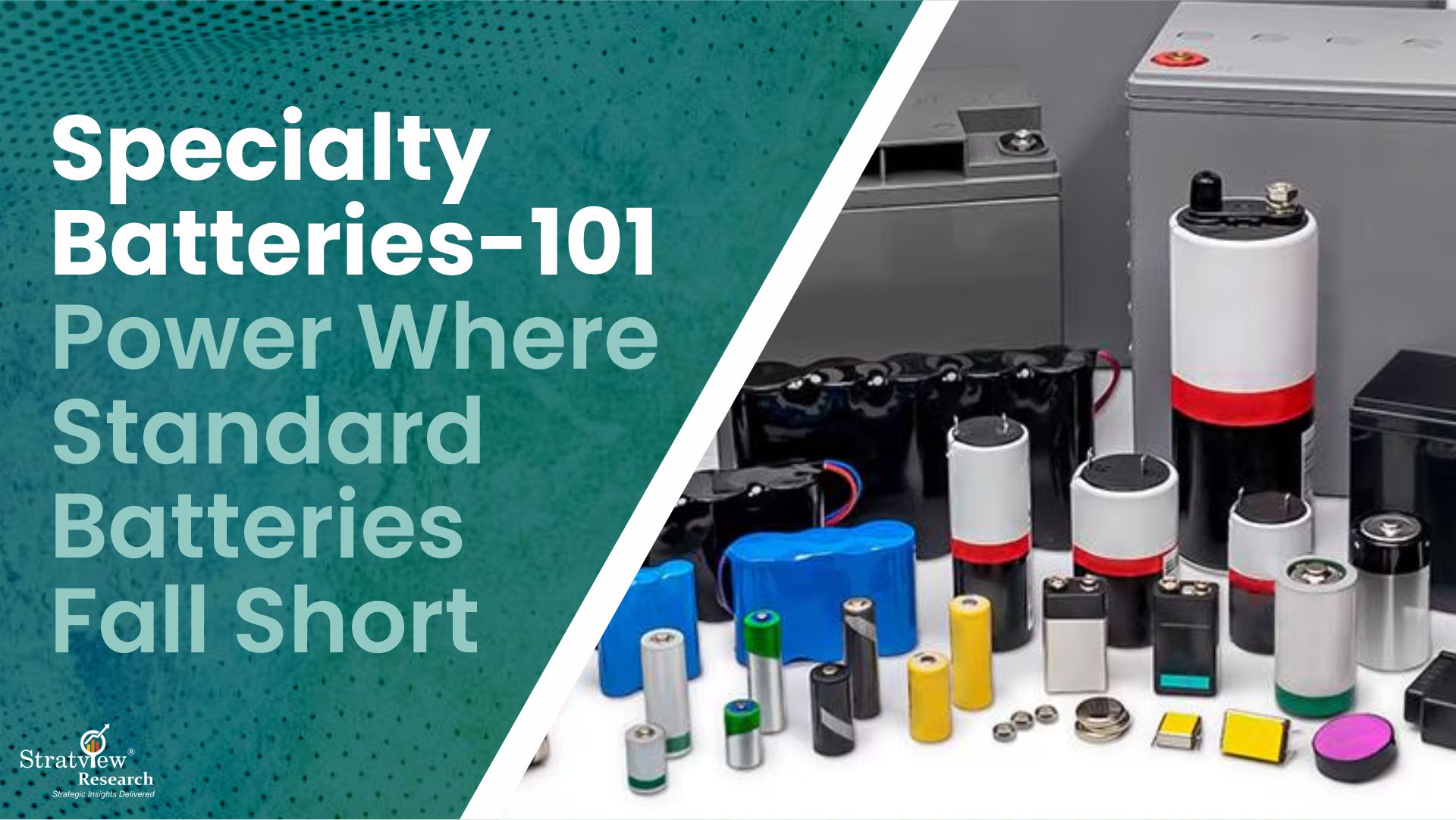
What Are Specialty Batteries?
Specialty batteries are purpose-engineered energy storage solutions designed for devices and systems that require specific shapes, sizes, power capacities, or operating characteristics. Unlike conventional batteries made for mass use, they are developed for application-specific needs such as compact form factors, high energy density, long shelf life, stable performance, and regulatory compliance.
These batteries are typically produced in lower volumes but involve higher levels of engineering, testing, and validation. In many cases, failure is not an option, making reliability and performance far more important than upfront cost.
How Specialty Batteries Differ from Conventional Batteries
|
Aspect |
Specialty Batteries |
Conventional Batteries |
|---|---|---|
|
Application Compatibility |
Tailored for specific devices and critical systems |
Suitable for general-purpose devices |
|
Reliability & Risk |
Designed for failure-intolerant operations |
Acceptable for non-critical use |
|
Operating Environment |
Performs reliably in extreme conditions |
Best for normal environments |
|
Compliance & Certification |
Meets industry-specific regulatory standards |
Meets basic safety requirements |
|
Size & Design Flexibility |
Available in customized and compact formats |
Limited to standard sizes |
|
Long-Term Cost Impact |
Higher upfront cost, lower failure-related losses |
Lower upfront cost, higher replacement risk |
Source: Stratview Research
Key Types of Specialty Batteries
1. Lithium Primary Batteries
Lithium primary batteries are non-rechargeable cells known for their high energy density, long shelf life, and stable voltage output. They are widely used in medical devices, utility meters, remote sensors, and defense systems where long-term reliability is essential.
2. Lithium-Ion Specialty Batteries
Lithium-ion specialty batteries are rechargeable systems customized for high-performance applications requiring compact size, low weight, and precise power management. They are commonly used in medical equipment, aerospace electronics, industrial tools, and advanced mobility systems.
3. Nickel-Based Batteries (NiMH and NiCd)
Nickel-metal hydride and nickel-cadmium batteries are valued for their durability, wide operating temperature range, and consistent performance. They are often used in aviation systems, emergency backup equipment, and industrial applications.
4. Thermal Batteries
Thermal batteries remain inactive until activated by heat and are designed to deliver high power for short durations. They are primarily used in defense and aerospace systems such as missiles and emergency power units.
5. Thin-Film and Micro Batteries
Thin-film and micro batteries are ultra-compact power sources designed for miniature electronic devices. They are widely used in medical implants, wearable electronics, sensors, and microelectronic systems where space is limited.
6. High-Temperature Batteries
High-temperature batteries are engineered to operate in extreme thermal environments. They are commonly used in oil and gas exploration, downhole tools, and industrial monitoring systems where standard batteries cannot function reliably.
Where Are Specialty Batteries Used?
Specialty batteries are used in devices and systems that require specific power, size, or reliability beyond standard batteries, including compact electronics such as watches, key fobs, hearing aids and smoke detectors that use button cells, medical devices like implantables and monitoring equipment, aerospace and defense systems for mission-critical power in satellites, avionics and unmanned platforms, industrial and remote monitoring equipment, and telecommunications backup systems, where dependable energy storage under varied environmental conditions is essential.
Technology Trends and Market Outlook
Ongoing innovation in battery chemistry and materials continues to enhance energy density, safety, and durability. Advances in lithium-based technologies, solid-state designs, and customized battery packs are contributing to the advancement of the next generation of specialty batteries.
According to recent industry analysis of the speciality battery market published by Stratview Research, the global market was valued at approximately USD 3.6 billion in 2024 and is expected to grow steadily toward USD 4.4 billion by 2030, reflecting durable demand driven by medical, aerospace, and industrial applications rather than sheer volume.
Specialty batteries may not attract the same attention as mass-market energy storage technologies, but their role in enabling critical infrastructure, medical systems, aerospace platforms, and industrial operations is fundamental. As industries continue to advance toward higher reliability, automation, and miniaturization, specialty batteries will remain a core enabling technology where performance, safety, and operational continuity cannot be compromised.
Subscribe to our newsletter
Related Blogs:

Automotive Nonwoven – 101 – How They’re Made, Used, and Why They Matter
.jpg)
Aircraft Interior Sandwich Panels – 101
.jfif)
Aircraft Floor Panel 101 - Designed for Safety, Not Visibility

Automotive Airbag Fabric 101 – Engineered for Instant Protection
Didn’t find what you were looking for?
Tell us about your requirements
(Our team usually responds within a few hours)