Imagine two electric vehicles rolling off the same production line.
Same battery. Same motor. Same advertised range.
Yet one consistently drives farther, accelerates more smoothly, and uses energy more efficiently, not because of better technology, but simply because it weighs less.
Sounds surprising? It isn’t.
It’s pure physics.
Today’s EV battery packs typically weigh between 600 and 1,100 pounds, with most offering driving ranges of roughly 250 to 400 miles per charge. Within that balance of weight and range, every additional kilogram puts extra demand on the battery system. That’s why even small reductions matter. In fact, the U.S. Environmental Protection Agency notes that removing just 100 pounds from a vehicle can improve energy efficiency by 1–2%, a valuable advantage in the race for longer EV range.
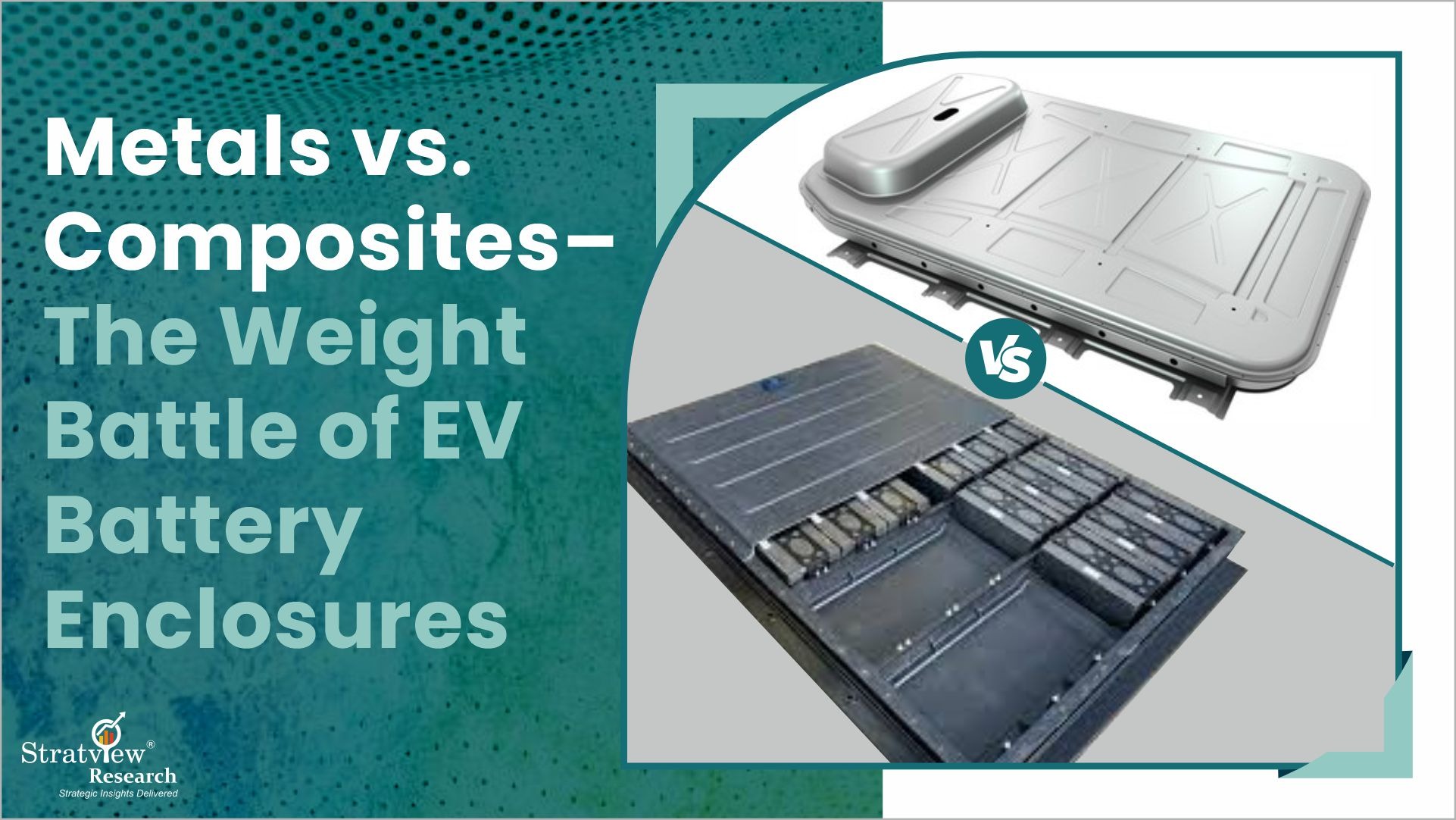
Out of sight beneath the cabin floor, battery enclosures have emerged as one of the most impactful opportunities for weight reduction, given that battery packs can constitute up to 25%–40% of total vehicle weight.
Why Composites are Outpacing Metals in EV Battery Enclosure Design
For years, aluminium has been the material of choice for EV battery enclosures, and for good reason. Compared to traditional steel designs, aluminium structures are typically 40–50% lighter, while still offering strong corrosion resistance and solid structural performance. This made aluminium a major step forward as the industry moved away from heavier metallic designs.
However, even aluminium brings a noticeable weight burden.
Metallic battery enclosures continue to add approximately 110–160 kilograms to total vehicle mass, creating a significant weight burden for EV platforms. Over time, that added mass quietly reduces driving range, lowers energy efficiency, and impacts overall performance.
Thermal performance is another challenge. With a melting point of around 630°C and high thermal conductivity, aluminium struggles in extreme failure conditions. Battery fire events can exceed 1,200°C, limiting aluminium’s ability to contain thermal runaway for prolonged periods.
This is where composite battery enclosures deliver a clear performance advantage.
By shifting to advanced composite materials, battery enclosure weight drops dramatically to just 60–90 kilograms, delivering up to 40% weight reduction without sacrificing strength or durability. Materials such as sheet molding compounds, with densities of 1.5–2 g/cm³ compared to aluminium’s 2.7 g/cm³, make lighter yet robust designs achievable.
And the advantages go beyond mass savings. Composites naturally resist heat transfer, providing superior thermal insulation that helps maintain optimal battery temperatures and slow the spread of thermal runaway, a critical safety benefit in modern EV architectures.
Lightweight Innovation Meets Market Momentum
What began as a smart engineering upgrade is now advancing the competitive future of electric mobility. With composite battery enclosures delivering weight savings of around 40% compared to traditional aluminium designs, automakers are achieving significant improvements in EV range, energy efficiency, and overall vehicle performance, all while enhancing thermal safety.
Yet this shift extends far beyond a simple material change. It signals a broader strategic evolution, one that is beginning to influence vehicle design philosophies, safety expectations, and long-term profitability across the EV ecosystem. The growing confidence in lightweight solutions is also reflected in market projections, with the Composite EV Battery Enclosures Market expected to expand at a 23.5% CAGR and approach US$ 5.0 billion by 2030.
Still, the full impact of this transition will reveal itself over time. As EV platforms continue to evolve, the shift from aluminium to composites in not just battery enclosures but across various structural elements is gradually reshaping how future vehicles are engineered.
TAGS: Composites Automotive Mobility
Subscribe to our newsletter
Related Blogs:
Automotive Nonwoven – 101 – How They’re Made, Used, and Why They Matter
.jfif)
Automotive Carbon Ceramic Brakes Market - Explained in a Minute
Didn’t find what you were looking for?
Tell us about your requirements
(Our team usually responds within a few hours)