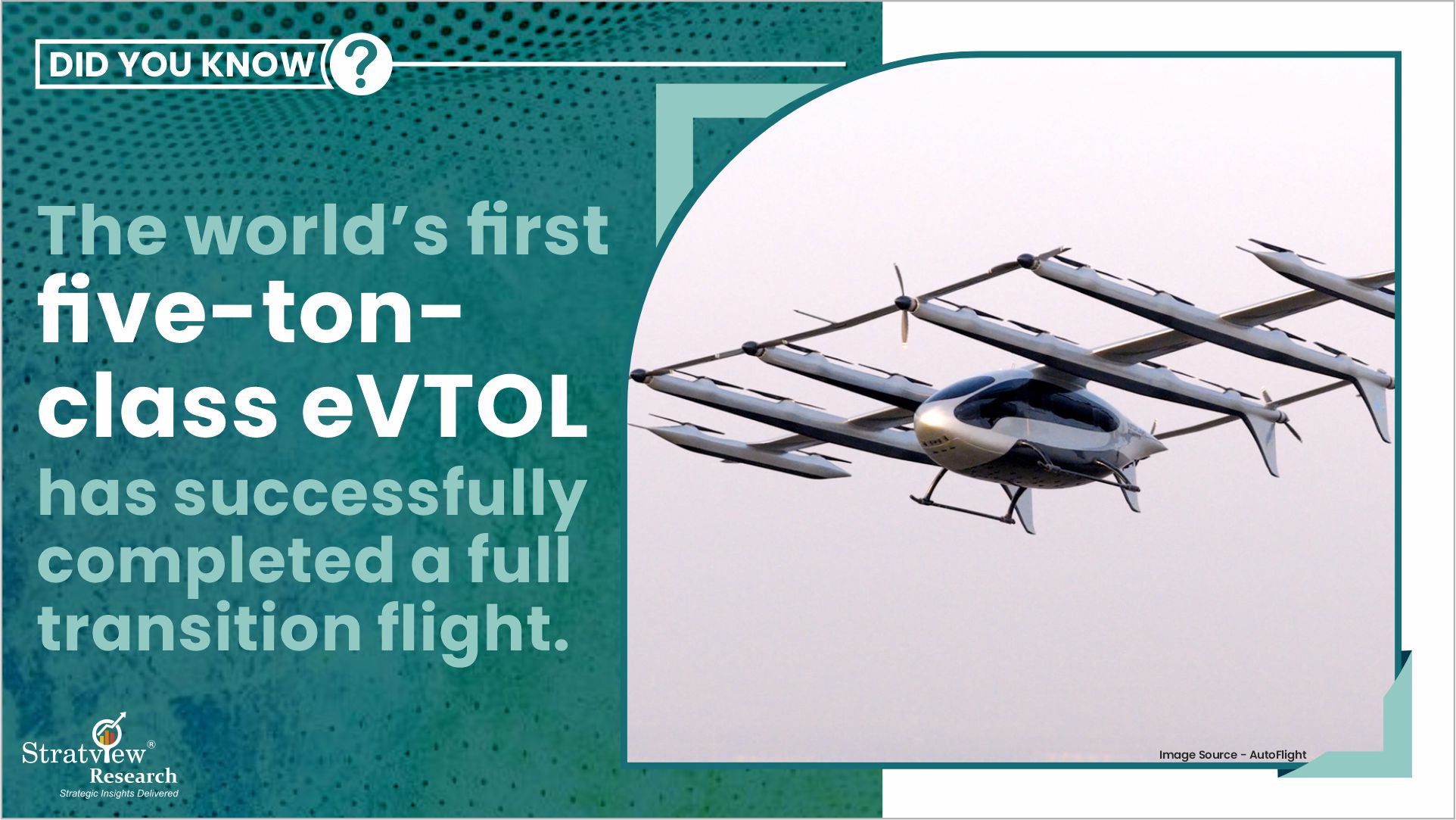
If that sounds like something from the future, it just happened in the present. On 5 February 2026, Chinese start-up AutoFlight reached a major aviation milestone by successfully conducting a full transition flight of its Matrix eVTOL aircraft, the first time this complex manoeuvre has been achieved by a five-ton-class eVTOL. The demonstration took place at AutoFlight’s test facility in China, where Matrix lifted off vertically like a helicopter, transitioned into forward flight like a conventional aeroplane, and then returned to vertical mode for landing. For an aircraft with a maximum take-off weight of 5,700kg, this isn’t just a technical achievement; it’s a statement about how fast electric aviation is scaling up.
To put the scale and capability of Matrix into perspective, its core specifications tell a powerful story.
Key Highlights at a Glance
- Aircraft: AutoFlight Matrix – world’s first five-ton-class eVTOL
- Maximum take-off weight: 5,700kg
- Passenger capacity: Up to 10 business-class passengers or six VIP seats
- Cargo payload: Up to 1,500kg
- Dimensions:
- Wingspan: 20 metres
- Length: 17.1 metres
- Height: 3.3 metres
- Cabin dimensions: 5.25m (length) × 1.8m (width) × 1.85m (aisle height)
- Range: 250km (pure electric) | up to 1,500km (hybrid-electric)
What makes Matrix especially compelling is that it breaks away from the familiar image of eVTOLs as small, taxi-style aircraft. Most prototypes in development today are designed for short urban hops and limited payloads. Matrix, by contrast, is built as a multi-role platform. The passenger version reinforces this focus on scale and comfort, with configurations supporting up to 10 business-class passengers or six VIP seats. Standard amenities include washbasins, lavatories, climate control, ambient lighting, and oversized 1m² windows that deliver 50% enhanced light transmission. It feels less like a flying taxi and more like a compact regional aircraft, just one that happens to take off vertically.
The cargo variant tells an equally interesting story. With a maximum payload of 1,500kg, a large forward-opening door, and the ability to carry two AKE standard air cargo containers, Matrix is clearly designed with logistics in mind. This configuration makes it suitable for time-sensitive freight, remote access routes, and emergency supply missions, areas where conventional runways aren’t always available. Delivering this level of size, range, and versatility requires a fundamentally different engineering approach.
From an engineering perspective, Matrix uses AutoFlight’s proprietary lift-and-cruise compound wing design, combining a triplane wing layout with a six-arm rotor structure to maintain aerodynamic stability during both vertical and forward flight. The aircraft’s high-voltage distributed propulsion system, incorporating up to 20 fifth-generation lift motors, adds redundancy that allows continued flight capability even in the event of single or dual motor failures. The platform will be available in both pure-electric and hybrid-electric variants, offering operational flexibility across different mission profiles, with a 250km pure-electric range and up to 1,500km in hybrid-electric form.
This milestone comes at a pivotal moment for the broader industry. The global eVTOL market is projected to grow at a CAGR of 28.4% from 2025 to 2040, reaching a market size of USD 3.2 billion by 2040. AutoFlight’s Matrix offers a glimpse into what that growth may look like: larger aircraft, higher payloads, longer ranges, and more diverse applications. In simple terms, this flight signals that eVTOLs are moving beyond the experimental stage. They are evolving into scalable, capable platforms with the potential to reshape how people and goods move through low-altitude airspace.
TAGS: Aerospace Composites Aircraft Engine Aerospace
Subscribe to our newsletter
Related Blogs:
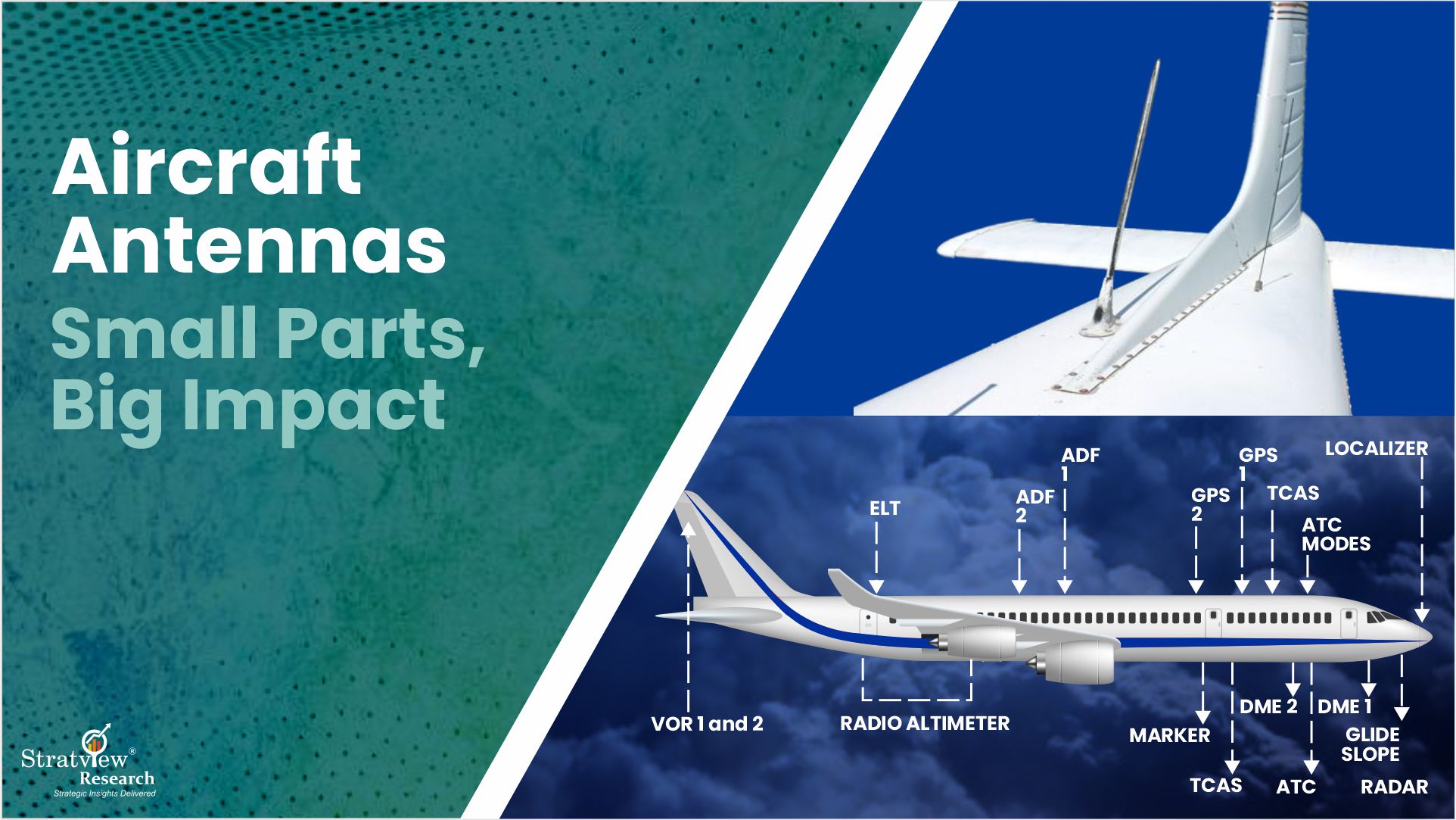
Signals That Keep Every Flight Alive, Aircraft Antenna Market Explained in a Minute
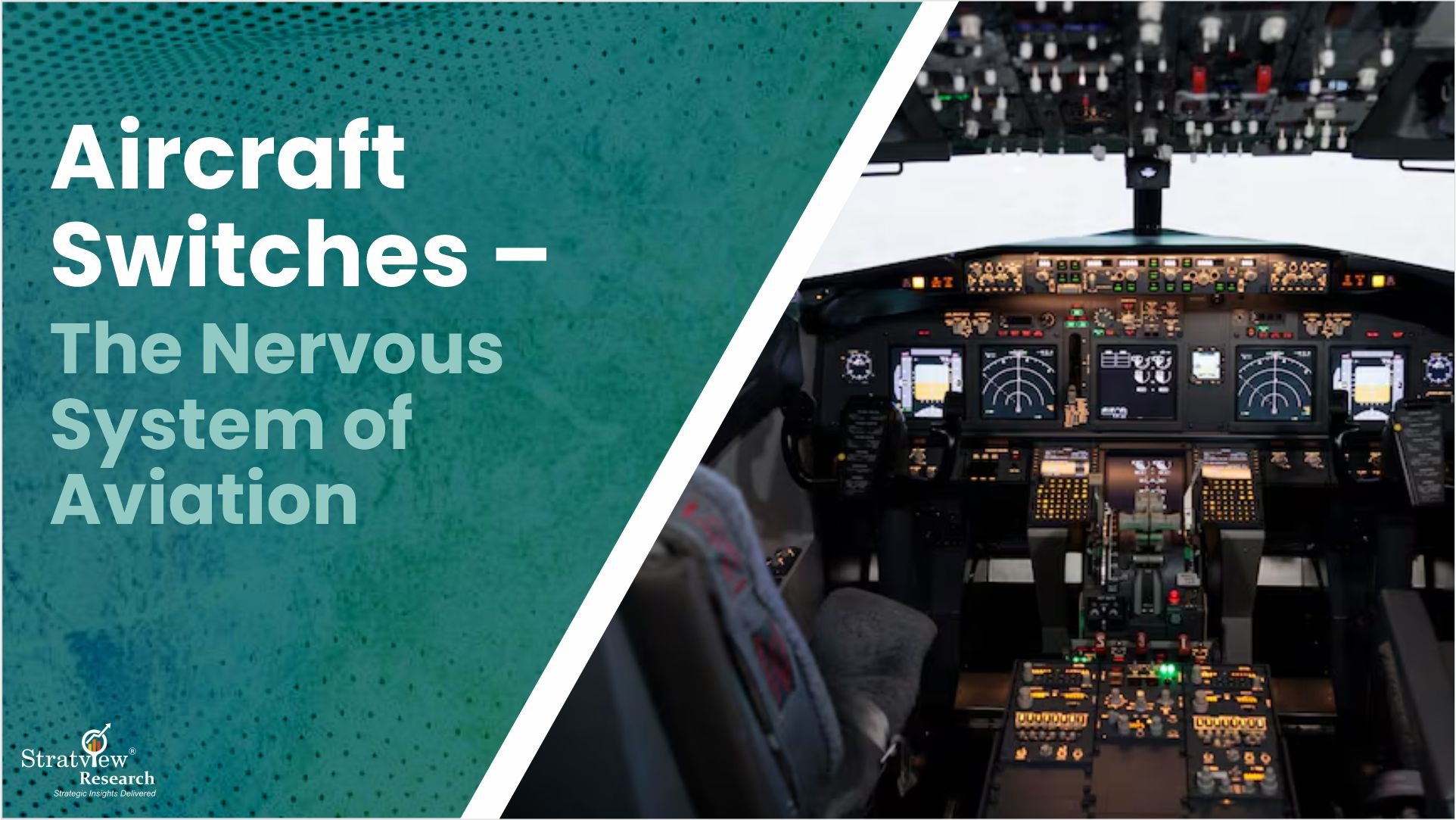
Aircraft Switches - The Nervous System of Aviation
.jfif)
Aircraft Floor Panel 101 - Designed for Safety, Not Visibility
Didn’t find what you were looking for?
Tell us about your requirements
(Our team usually responds within a few hours)