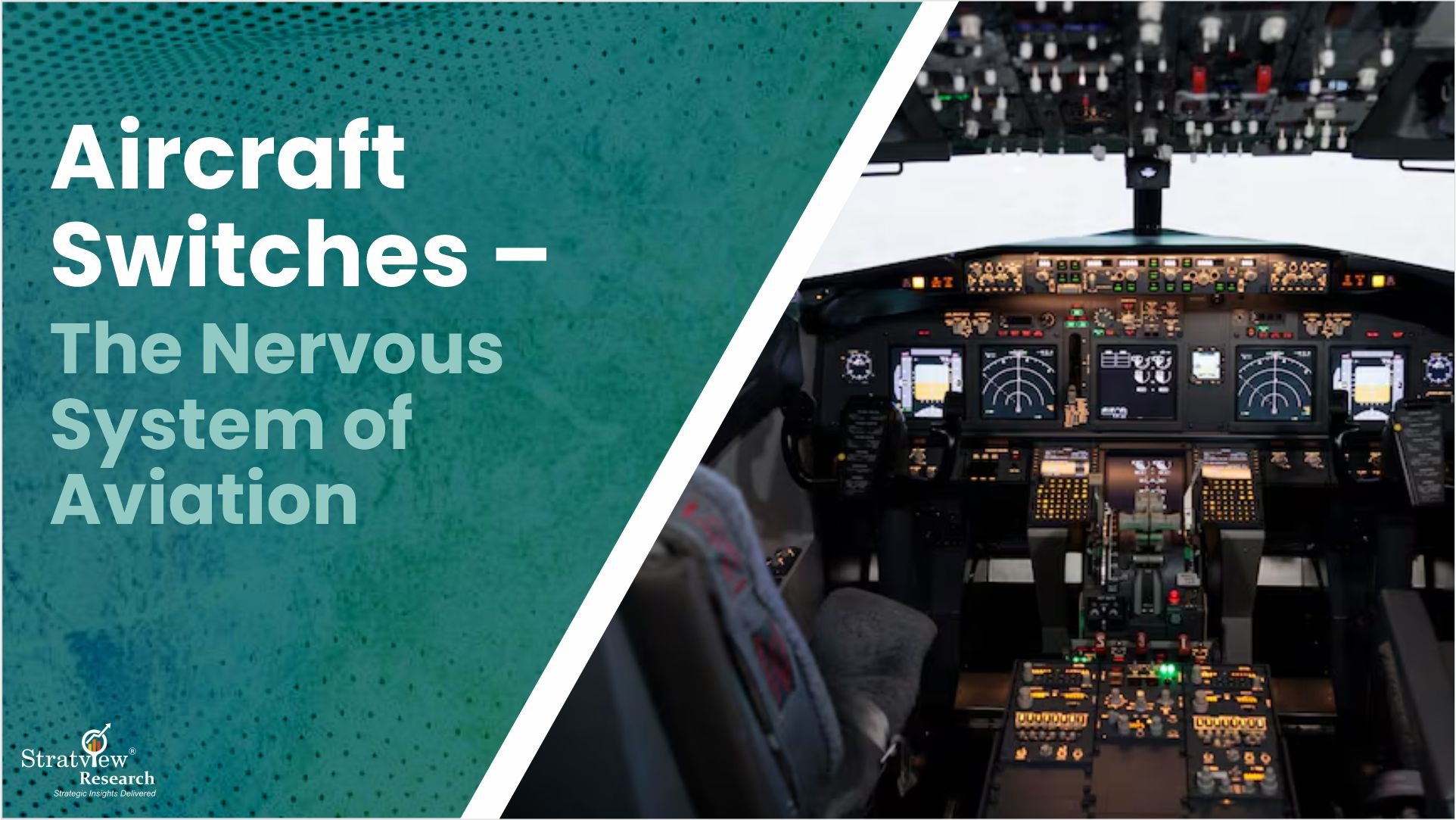
Aircraft switches form the nerve system of an aircraft’s electrical architecture - controlling circuits that allow pilots to start, stop, or redirect current to critical functions. Every switch serves as a command point, powering lighting, navigation, communication, flight controls, and essential aircraft systems across the cockpit, cabin, engine/APU zones, and other airframe systems.
You’ll find aircraft switches across the cockpit, cabin, engine/APU, and other systems, but the cockpit remains the most switch-intensive. Did you know the Airbus A320-200 cockpit alone integrates nearly 490 switches and buttons?
No surprise, our research estimates that over 60% of all aircraft switches are installed in the cockpit. From fuel pumps and autopilot to emergency overrides, these switches ensure instant and reliable system response.
As aircraft platforms become more electrified, digitally integrated, and system-intensive, the demand for high-performance, lightweight, and miniaturized switches continues to accelerate. Reflecting this shift, the global aircraft switches market is set to grow from USD 1.1 billion in 2024 to USD 1.7 billion by 2034, at a CAGR of >3.5%.
Aligned Growth of Commercial Aircraft and Standard Switches
With the commercial fleet far outpacing all other aircraft categories, including regional aircraft, general aviation, helicopters, and military platforms, its sheer scale continues to drive over 65% of the aircraft switches market in 2024.
The logic is simple: a larger commercial fleet simply means more aircraft to build and maintain – driving higher switch installations, replacements, and integration across cockpits, cabins, and airframe systems.
Aircraft usually have either standard switches or custom switches. At present, standard switches dominate the skies – accounting for nearly 90% of all aircraft switch installations, simply because they’re cost-efficient, proven, and compatible across most platforms. But as avionics get smarter and electric systems demand more tailored functionality, custom switches are accelerating, poised for the fastest growth in the coming years.
A Closer Look at Switch Type & Installation Trends
The industry leans heavily on automatic switches – nearly 70% of all usage – driven by rising aircraft electrification, deeper automation, and the steady transition toward more-electric aircraft (MEA).
On the installation front, retrofit and linefit are the two types, where linefit clearly is the industry-choice. OEMs and airlines prefer installing advanced switch systems during initial assembly because it ensures cleaner integration, avoids costly retrofits later, and streamlines certification. The result is higher efficiency, lower complexity, and far wider adoption compared with retrofit installations.
Global Dynamics and the Path Forward
Globally, the strongest aviation infrastructure, manufacturing capability, and system-level R&D are concentrated in North America. The region hosts industry heavyweights such as Honeywell, Collins Aerospace, Curtiss-Wright, TransDigm, and ITT Aerospace Controls – companies that shape most of the innovation in aircraft switching systems.
As a result, North America retains a commanding >45% share of the market in 2024, supported by robust production rates and a consistently active aftermarket.
Looking ahead, as fleets expand and modern aircraft adopt increasingly sophisticated systems, the demand for reliable, compact, and intelligent switches will continue to rise. Innovations in smart cockpit integration, miniaturized designs, and ruggedized components are set to enhance operational efficiency and safety, ensuring their pivotal role in every flight.
TAGS: Aircraft Interior Aerospace & Defence
Subscribe to our newsletter
Related Blogs:
Bolts that Hold Every Flight – Aircraft Bolts Market Explained in a Minute.
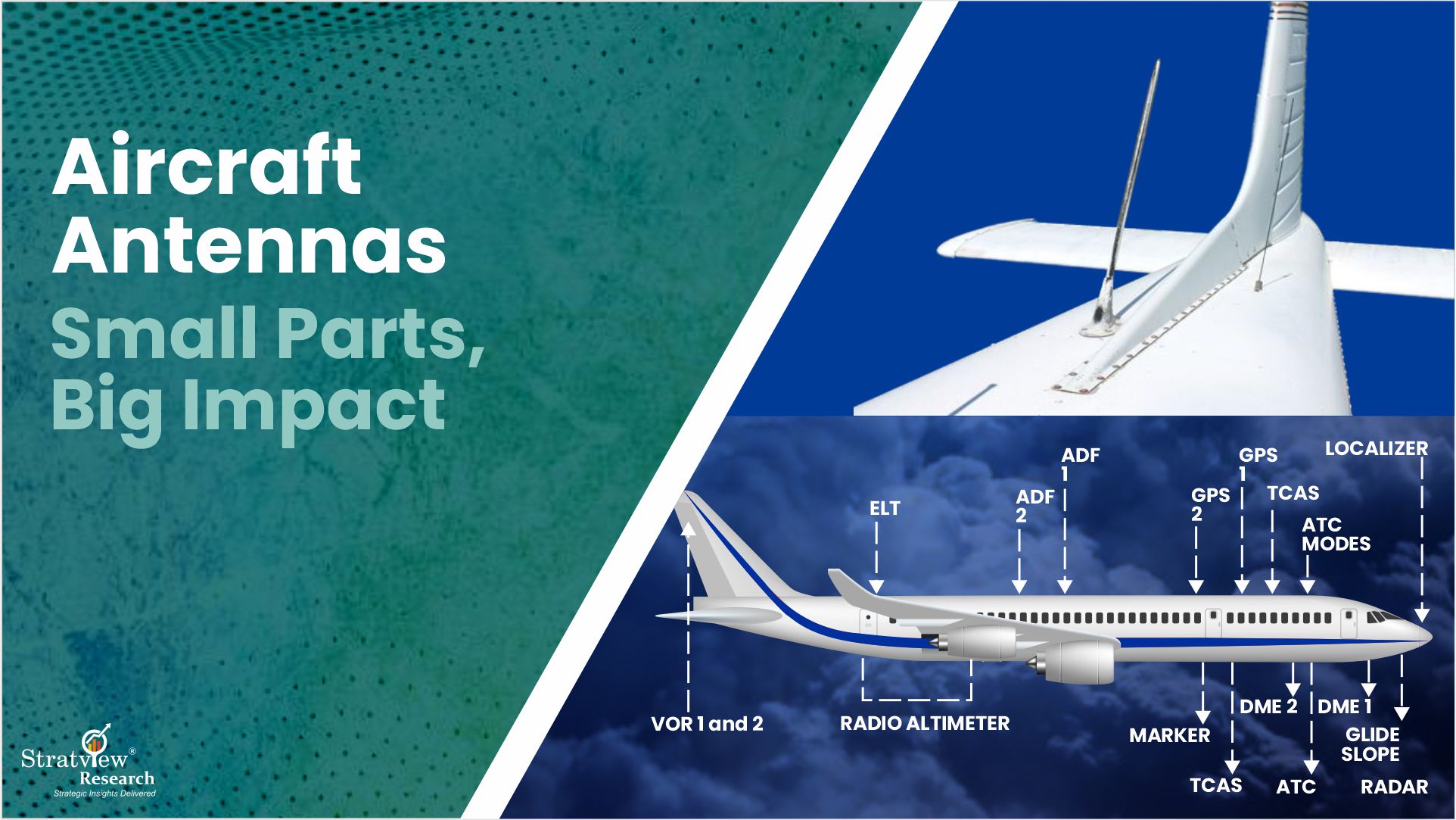
Signals That Keep Every Flight Alive, Aircraft Antenna Market Explained in a Minute
Didn’t find what you were looking for?
Tell us about your requirements
(Our team usually responds within a few hours)