.jpg "Digital Twin")
As highlighted by Stratview Research, the digital twin market stood at around US$7.2 billion (€6.80 billion) in 2021 and is expected to exceed US$92 billion (€86.89 billion) by 2028, growing at an impressive 44% annually. This surge is fueled by strong cross-industry adoption, faster innovation cycles, and deeper integration with technologies such as AI, IoT, and advanced analytics.
How would you react upon seeing a replica of a what-if scenario for your product, or simulated structure of a plan? Wouldn’t it be surprising to process all the upgrades you wished to in a product before it steps into the real-world?
Well, that’s what a digital twin promises. Here, in this piece, we’ll take a closer look at this revolutionary technology and know what makes it vital for the industrial world.
‘Digital Twin’ in a nutshell
In simple words, this hottest tech trend is a replica, or a digital avatar of a living or non-living physical object. Or say, a digital twin serves as a proxy for the current condition of anything it represents. This helps in attaining a real-time data with which, one can see the current progress or bottlenecks and plan ways to resolve or improve them.
How does this Tech Work?
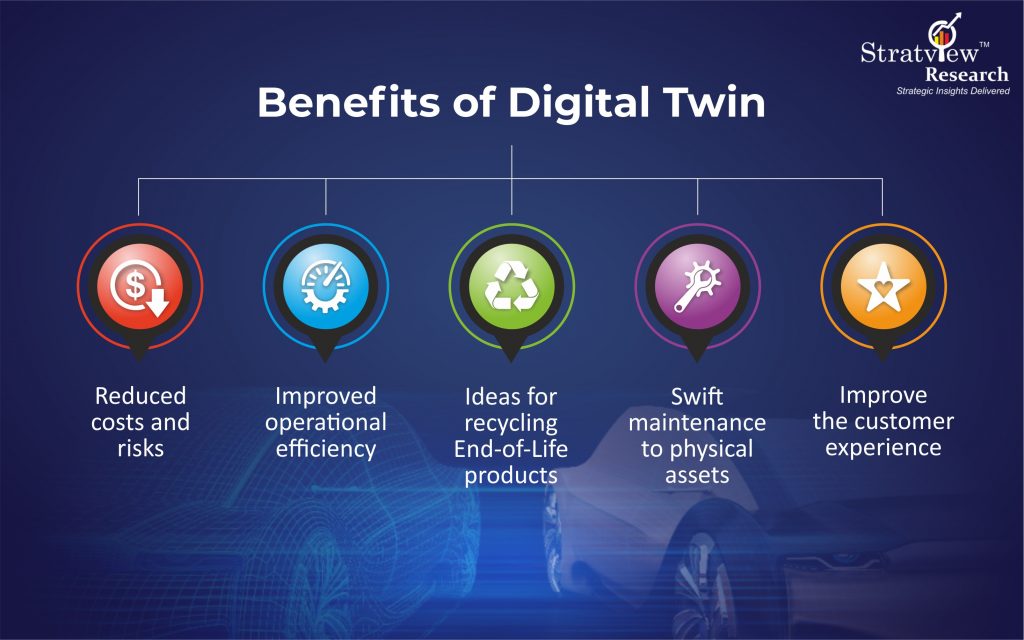
Fig. 1: Chart Showing the Key Benefits of Digital Twin Technology
When a twin of a physical product is created and displayed digitally, smart sensors are used to collect and create real-time representation from the real product to digital twin. This transferred data not only replicates the physical product, but also mimics its behaviour.
Let us take a deeper dive into what technologies are embraced while applying a digital twin.
Technologies used in Digital Twin
Digital Twins are broad in scope and its application incorporates the red-hot tech-trends such as Artificial Intelligence (AI), Internet of Things (IoT), Blockchain, Machine Learning (ML), Big Data Analytics, and more.

Fig. 2 :Image Depicting the Working Mechanism of Digital Twins
- Artificial Intelligence (AI) – It helps in analysing the gathered data automatically, and also helps in predicting possible outcomes and suggests ideas how to minimise or inhibit potential problems.
- Internet of Things (IoT) – It is considered as the backbone of any Digital Twin application. Digital Twins require a large amount of information. IoT sensors collect the information and send it to the cloud to be used by various systems.
- Blockchain – It is a way to generate and monitor digital twins due to the security and immutability of technology.It can surmount the safety and security gaps to help Digital Twin function without hassle.
- Cloud – In simple terms, in order to create and make the most of a Digital Twin, one needs Cloud. As applications of Digital Twins operate with huge data, cloud computing allows to store all data in the virtual cloud and easily access required info from any place.
- Extended Reality (XR) – It is an umbrella term encapsulating three major trends including Augmented Reality (AR), Virtual Reality (VR), Mixed Reality (MR). It can improve the human–machine interaction by combining the real and virtual worlds.
- Machine Learning – It enables systems to learn the provided data and algorithms to imitate any set of tasks. It helps in providing useful analytics for complex datasets that cannot be analysed with hand-coded algorithms.
- Big Data Analytics – Digital Twin is all about analysing data, and ‘Big data analytics’ is an advanced way to analyse huge, diverse datasets.
Does it Only Replicate a Product?
Not only products, but this tech-trend can replicate multiple objects, processes, etc. It comes in various forms, but is distilled across three basic sectors including –

Fig. 3 : Key Technologies Enabling Digital Twin Functionality
- Product Digital Twin – that captures product lifecycle enabling user to understand how products or their parts interact and how their environment allows for optimisation of the constituent parts.Take an aircraft, for instance. If you wish to see how high temperature weather might affect your engine’s performance, you don’t need to fly one, all you need to do is to increase the temperature on the digital twin.
- Process Digital Twin – thatenhances the Product Digital Twin and optimises not only the equipment but the entire manufacturing process.
- System Digital Twin – thatreplicates the individual product as components of a larger system. As it is a combination of both product and process twin, and it can perform either of the tasks, it is the widely used solution across various industries.
Industries that use Digital Twin
Knowing this technology can be beneficial to businesses in several ways (refer to Fig.3.), Digital Twins are now being widely applied across all industries including Aerospace & Defense, Automotive & Transportation, Healthcare, and more.
In the year 2021, the market of Digital Twins accounted for ~US$ 7.2 Billion (€6.80 billion), which is expected to cross US$ 92 Billion (€86.89 billion) by 2028, charting a whopping annual growth of 44%. The rise is majorly due the benefits it provides to the businesses, and multiple industries using them, rapid technological advancements in this field, and the integration of this technology with other hot trends like AI, IoT, etc.
Below given are a few use cases how different industries make use of Digital Twins:
- Manufacturing is one of the areas that digital twins are revolutionising operations. Manufacturing pulls a lot of investment and high-cost equipment that generates a high volume of data. Digital twin solutions in manufacturing can help in minimising costs and risks in performance improvement, design customisation, and product development.
- Energy & Utility companies are using this technology to design, monitor and maintain power plants, electric grids, transmission, and consumption. Process digital twins are likely to create electric grids twin someday.
- Construction industry can use digital twin technology in order to incorporate neighborhoods and cities with a target of low cost and high-quality infrastructure. For instance, in January 2022, Las Vegas unveiled a digital twin of a 7-square-kilometre section of its downtown.
- Healthcare – Imagine, how safe it could be to foresee the effect of any experimental treatment on a patient without physically risking their lives. Generating a patient’s twin body and gathering continuous cellular level data has become now possible. Not only this, but this tech can twin medical device development, disease demonstrating, and hospital operations, etc.
Is 'Twinning' really 'winning'?
Gaining certainty in such uncertain times can deliver major benefits to all major sectors. Studies state that Digital Twin technology has the ability to increase the revenue by 10% and improve product quality by 25%.
It may seem far-fetched to assume that digital twin solutions may one day assist all the industries in becoming smarter, but the fact is, they are already doing it.
But despite many benefits, a few challenges seem to hinder the widespread adoption of the trend, making Digital Twins limited just on the drawing boards of many companies. Since this technology is in exploratory stage, and requires high investments, several organisations still have not included this in their operations. Although, as soon as this trend starts budding and blooming, it will start gaining traction. Real and growing like a wildfire, this technology is taking the shape of hierarchy.
Authored by Stratview Research. Also published on – iot-now
Subscribe to our newsletter
Related Articles:
Digitalization of Radiology: Safer, Quicker, and Clearer X-Rays
Didn’t find what you were looking for?
Tell us about your requirements
(Our team usually responds within a few hours)