




404
+1-313-307-4176

Automotive Composite Leaf Springs Market Analysis | 2026-2034

Automotive Composite Leaf Springs Market Size, Share, Trend, Forecast, Competitive Landscape & Growth Opportunities: 2026-2034
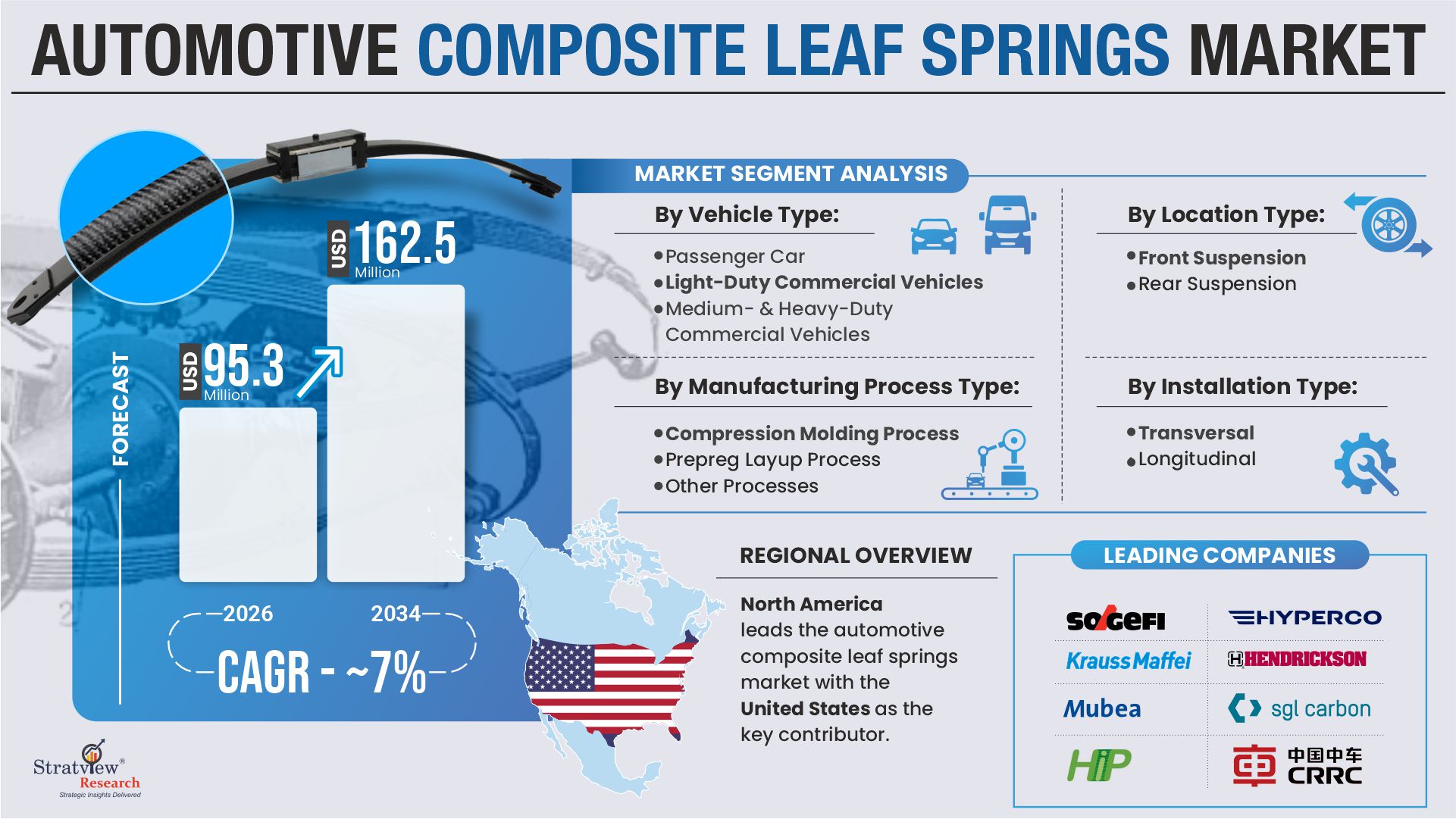
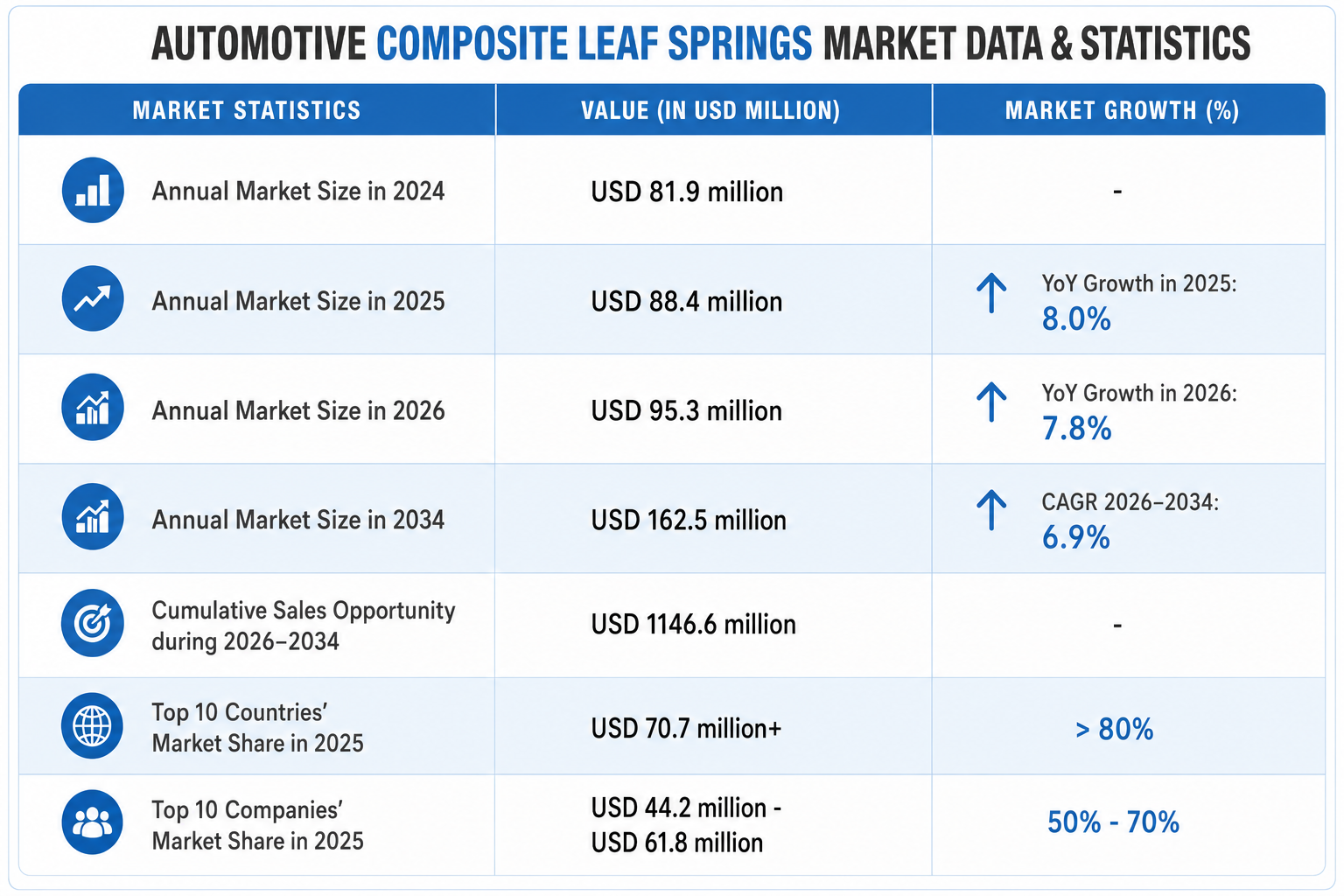
The market increased from USD 81.9 million in 2024 to USD 88.4 million in 2025, reflecting a YoY growth of 8.0%.
It is expected to reach USD 95.3 million in 2026, registering a YoY growth of 7.8%.
Over the forecast period 2026–2034, the market is projected to grow at a CAGR of 6.9%, reaching USD 162.5 million by 2034.
The automotive composite leaf springs market was valued at USD 88.4 million in 2025 and is expected to reach USD 95.3 million in 2026, reflecting a YoY growth of 7.8%. During 2026–2034, the market is projected to expand at a CAGR of 6.9%, reaching USD 162.5 million by 2034.
Market growth is being supported by increasing lightweighting requirements in commercial vehicles, where leaf springs account for approximately 10–20% of vehicle unsprung mass. Composite leaf springs offer significant weight savings compared with conventional steel springs while maintaining durability and load-bearing performance.
Demand is further reinforced by strong commercial vehicle production. Global LCV production reached ~15.5 million units during Q1–Q3 2025, sustaining demand for advanced suspension systems across logistics, freight, and last-mile delivery applications.
Overall, the automotive composite leaf springs market is expected to generate a cumulative sales opportunity of USD 1,146.6 million during 2026–2034.
Want to get a free sample? Register Here
Europe is expected to remain the dominant region during the forecast period.
By vehicle type, LCVs are expected to remain the dominant segment during the forecast period.
By installation type, transversal installation is expected to remain the dominant segment during the forecast period.
By location type, rear location is expected to remain the dominant segment, while front location is likely to be the fastest-growing segment during the forecast period.
By manufacturing process type, HP-RTM is expected to remain the dominant process during the forecast period.
Have a look at the sales opportunities presented by the automotive composite leaf springs market in terms of growth and market forecast.
Rising Adoption of Electric Vehicles
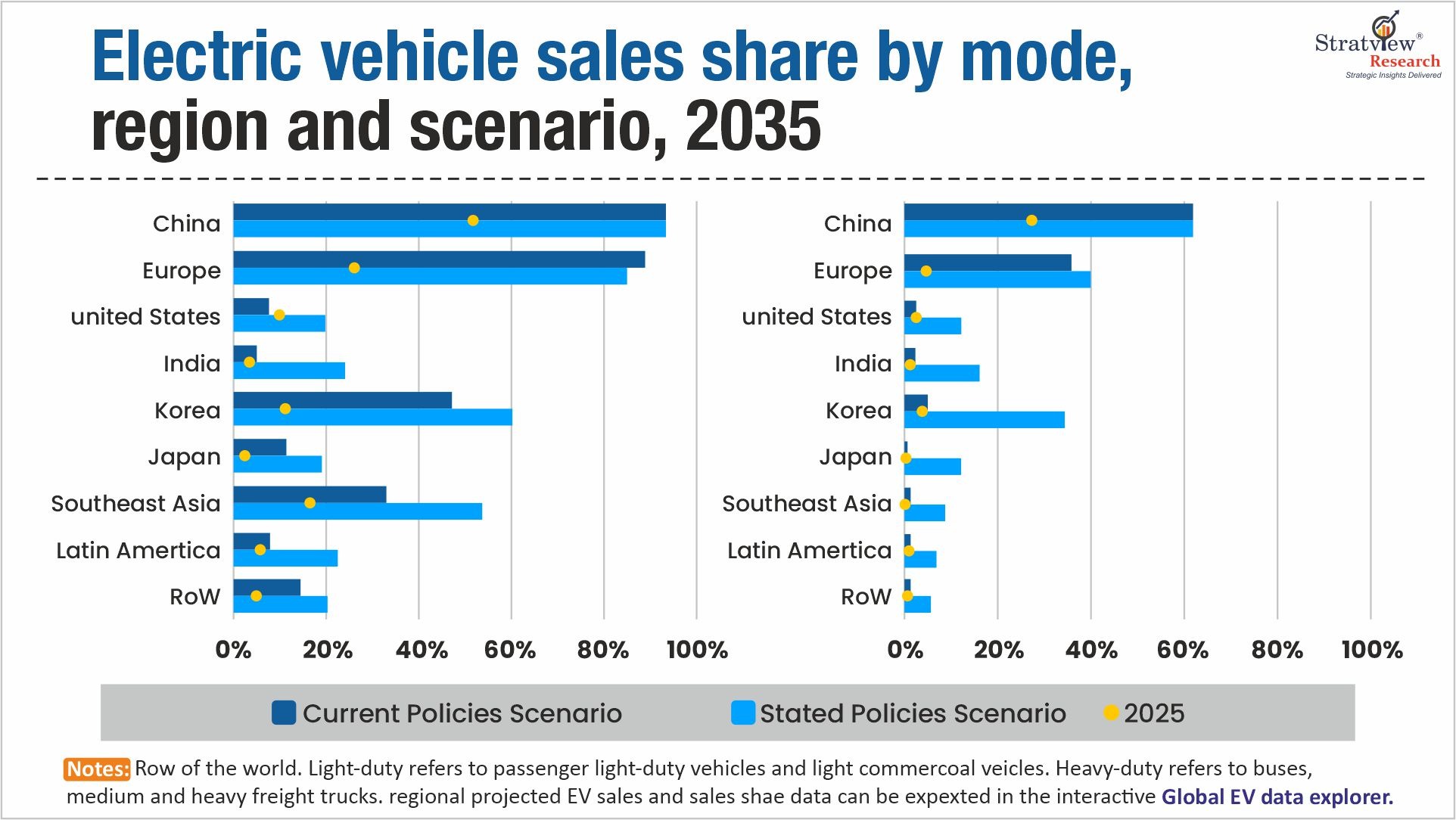
The growing adoption of electric vehicles (EVs) is driving the use of advanced materials and component technologies across the automotive industry. Government incentives, stringent emission regulations, improvements in battery technology, and expanding charging infrastructure continue to accelerate EV sales across major automotive markets.
Electric vehicle adoption surpassed 20 million units globally in 2025, reflecting strong growth across China, Europe, the United States, and other emerging EV markets. According to the International Energy Agency,, EVs are expected to account for an increasing share of total vehicle sales over the coming decade.
As EV manufacturers seek to maximize vehicle efficiency and offset the additional weight associated with battery systems, there is growing emphasis on lightweight and high-performance components across vehicle platforms.
The electrification trend is also extending to commercial vehicles, with global electric truck sales exceeding 400,000 units in 2025, more than doubling compared with 2024.
This increasing focus on vehicle efficiency and performance is expected to further support automotive composite leaf spring market growth, particularly in vehicle segments where lightweight construction and durability are critical design requirements.
Growing Production of Commercial Vehicles and Freight Transportation Demand
The increasing production of commercial vehicles remains a key driver for the automotive composite leaf springs market, as suspension systems are essential for load-bearing applications in trucks, buses, and pickups.
Based on data from the International Organization of Motor Vehicle Manufacturers (OICA), global light commercial vehicle (LCV) production reached approximately 15.5 million units during Q1–Q3 2025, reflecting strong demand from logistics, e-commerce, and last-mile delivery applications.
Growing fleet expansion and logistics-driven mobility requirements are further increasing the need for durable and efficient suspension solutions, which is positively influencing automotive composite leaf spring market demand, as composite systems are increasingly preferred for their lightweight structure, corrosion resistance, and performance advantages.
Increasing Focus on Vehicle Lightweighting and Fuel Efficiency
Vehicle manufacturers are increasingly focusing on lightweight vehicle designs to improve fuel efficiency, reduce emissions, and enhance overall vehicle performance. As regulatory requirements related to fuel economy and carbon emissions become more stringent, automakers are adopting lightweight materials across vehicle systems to reduce vehicle mass without compromising structural integrity and durability, supporting the automotive composite leaf spring market forecast.
According to industry estimates, a 10% reduction in vehicle weight can improve fuel economy by 6%–8%. Additionally, replacing conventional steel and cast-iron components with lightweight materials such as carbon fiber and polymer composites can reduce the weight of vehicle body and chassis structures by up to 50%.
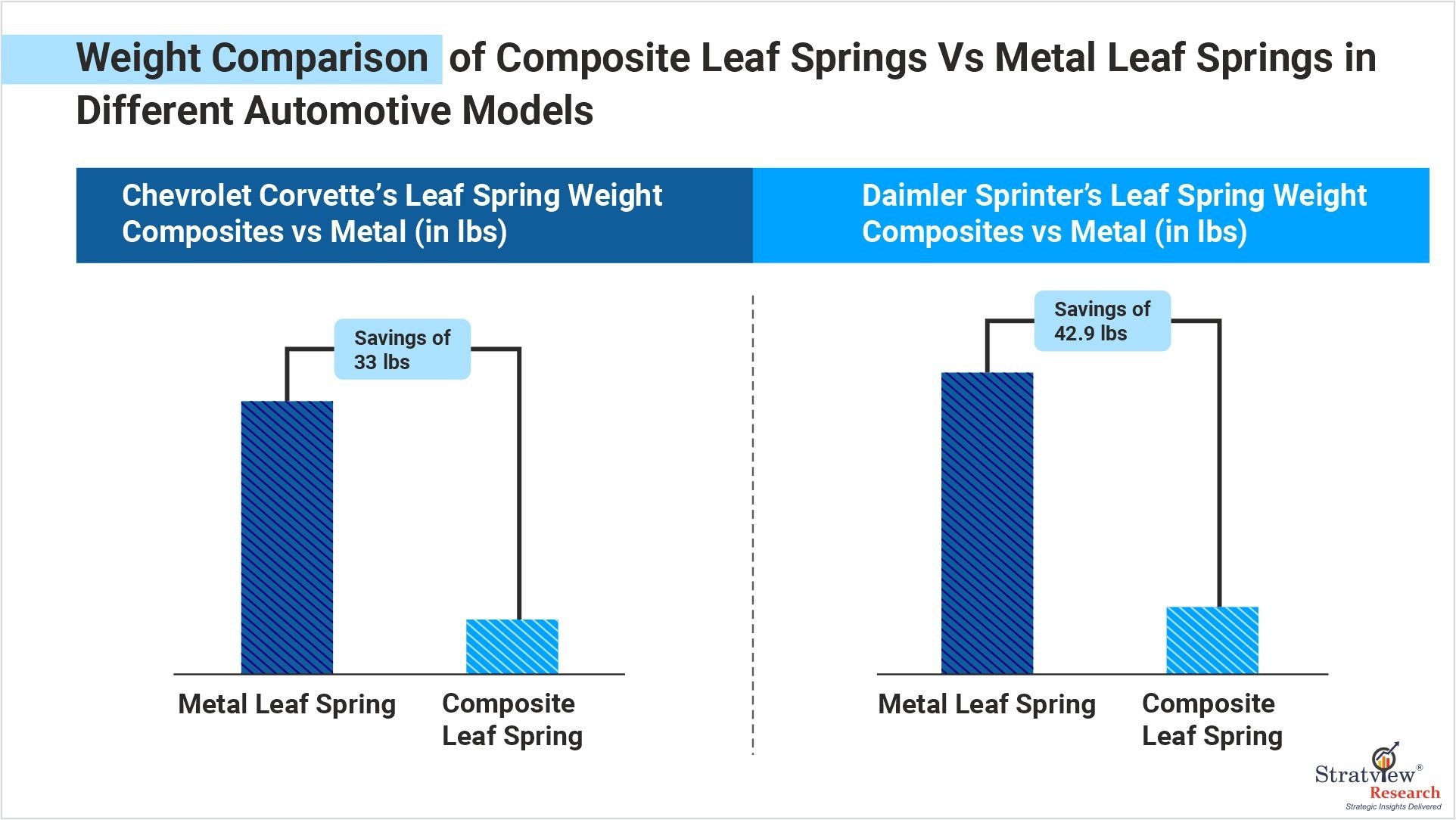
Supporting this trend, companies such as Hexcel are developing dedicated prepreg systems for composite leaf spring manufacturing. Hexcel’s HexPly® M901 solution enables up to 70% weight savings compared with steel leaf springs, along with approximately 50% faster cure times and 15% higher mechanical performance, while also offering inherent corrosion resistance due to its fiber-reinforced polymer structure.
As lightweighting becomes a greater focus across the automotive industry, composite leaf springs are increasingly being considered for applications were reducing weight without compromising performance is a key requirement.
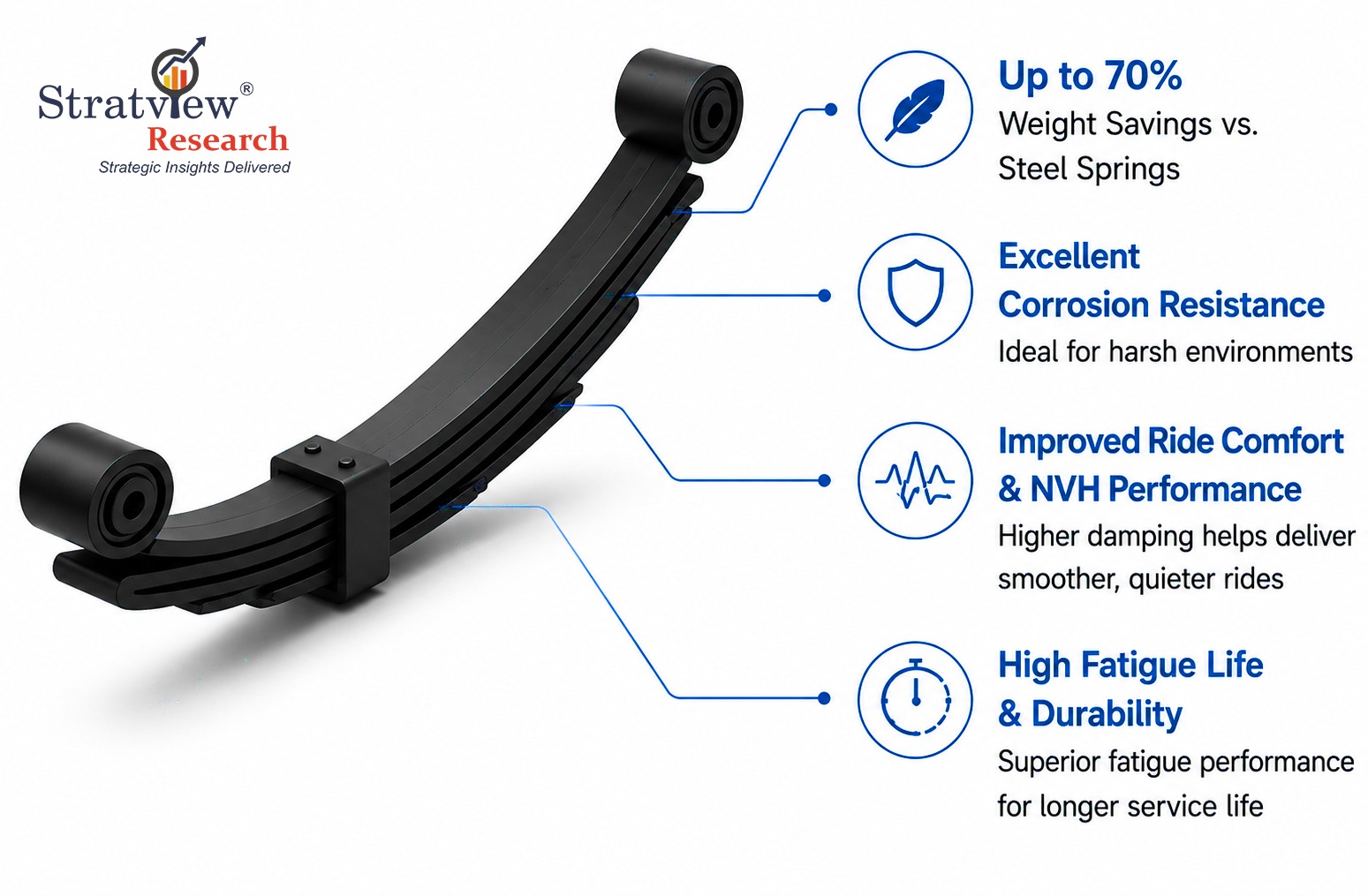
Shift Toward Platform-Level OEM Integration and Design Adoption
A key market opportunity is emerging from the increasing integration of composite suspension systems at the vehicle platform development stage. Rather than being deployed as isolated component replacements, composite leaf springs are being engineered directly into vehicle architectures, particularly in platforms optimized for lightweighting and performance efficiency.
The Mercedes-Benz Sprinter and eSprinter platform uses a factory-installed transverse fiberglass-reinforced polymer (GFRP) leaf spring, delivering a weight reduction of approximately 20–25 kg per vehicle compared with conventional multi-leaf steel spring assemblies, while also improving underbody packaging space for EV battery integration and supporting higher payload efficiency in commercial van applications.
Such developments reflect a clear shift toward structural lightweighting at the platform level, positioning composite leaf springs as a key component in future vehicle engineering.
|
Segmentations |
List of Sub-Segments |
Segments with High-Growth Opportunity |
|
Vehicle Type Analysis |
Passenger Car, LCV, M&HCV, and Other Vehicles |
LCVs are expected to maintain the lead throughout the forecast period. |
|
Installation Type Analysis |
Transversal and Longitudinal |
Transversal installation is likely to remain the larger market category over the next five years. |
|
Location Type Analysis |
Front Location and Rear Location |
Rear Location is projected to remain dominant, while front location is likely to remain faster-growing in the coming years. |
|
Manufacturing Process Type |
Compression Molding, HP-RTM, and Prepreg Layup |
HP-RTM is expected to be the dominant manufacturing process type during the study period. |
|
Region Analysis |
North America, Europe, Asia-Pacific, and The Rest of the World |
Europe is expected to maintain its reign over the forecast period. |
“LCV is expected to remain the largest vehicle type in the market over the next five years.”
The automotive composite leaf spring market is segmented into passenger car, LCV, M&HCV, and other vehicles. LCVs are expected to remain dominant in the market due to high production volumes and widespread use of leaf spring–based rear suspension systems.
The segment is further supported by strong regional momentum, with Spain recording an 11.7% rise in LCV registrations in 2025, followed by 13% YoY growth in Q1 2026, while France posted a 3.7% increase, according to ACEA, reflecting sustained LCV demand and strengthening adoption of lightweight suspension systems.
Additionally, rapid growth in e-commerce and last-mile delivery is further driving LCV demand, accelerating adoption of composite leaf springs due to their durability, corrosion resistance, and lower lifecycle maintenance compared to conventional steel springs.
Passenger cars are estimated to hold a significant share in the automotive composite leaf spring market forecast, driven by high production volumes, increasing lightweighting requirements, and the comfort and durability benefits offered by composite springs.
“Transversal installation held the larger market share in 2025 and are likely to experience the faster growth in the coming years.”
The market is segmented into transversal and longitudinal. Transverse composite leaf springs are gaining preference in electric vehicles, as they offer significant weight reduction, improved packaging efficiency, and the ability to integrate multiple suspension functions into a single component. All the key OEMs like Mercedes-Benz, Volvo, Volkswagen, Stellantis (Fiat), Iveco prefer transverse composite leaf springs in their key models.
Longitudinal composite leaf springs are commonly used in LCVs, M&HCVs, and semi-trailers at the rear axle, where they are mounted parallel to the length of the vehicle to support heavy loads and maintain axle stability. The longitudinal composite leaf spring is generally installed on the vehicle with non-independent suspension.
“Rear location is expected to maintain its lead in the market during the forecast period.”
The market is segmented into front location and rear location. Rear location is projected to be the dominant location type as leaf springs are primarily used in rear suspension systems, especially in LCVs and pickups, where load-bearing requirements are highest. The rear axle carries the majority of payload, making durability, stiffness, and fatigue resistance critical areas swhere composite leaf springs offer strong advantages. Additionally, rear suspension layouts are simpler and more compatible with leaf spring integration, reinforcing their widespread adoption in this position across key vehicle models.
“HP-RTM is projected to dominate the manufacturing process type in the market during the forecast period.”
The market is segmented into compression molding, HP-RTM, and prepreg layup. HP-RTM is the dominant manufacturing process type in the market owing to its ability to deliver high mechanical performance, excellent surface finish, and fast cycle times, making it suitable for high-quality, series production automotive applications. The process type offers short cycle times and is well-suited for high-volume production.
The prepreg layup process holds a smaller share in the market, as it is used in limited vehicle models, primarily in select LCV and M&HCV applications for front composite leaf springs, due to its higher cost and longer processing time compared to other manufacturing methods.
Compression molding is the preferred process for composite leaf springs in LCV and M&HCV segments.
“Europe is expected to remain the largest market for automotive composite leaf spring during the forecast period.”
Europe dominates the automotive composite leaf spring market due to the strong presence of premium OEMs, early adoption of lightweight materials, and stringent emission regulations driving vehicle weight reduction. High penetration in models from leading manufacturers, along with advanced manufacturing capabilities and a well-established supply chain for composites, further reinforces the region’s leadership.
North America is expected to remain the second-largest market as it has a higher demand for pickup vans, heavy duty trucks, and other commercial vehicles, which is supporting the region’s dominance.
The Rest of the World and Asia-Pacific regions accounted for smaller market shares, owing to the limited adoption of composite leaf springs across vehicle models in these markets.
Most of the major players compete in some of the factors, including price, service offerings, and regional presence, etc. The following are the key players in the automotive composite leaf springs market –
Mubea
HyperCo
Note: The above list does not necessarily include all the top players in the market.
Please write to us at [email protected] to suggest modifications to this list
February 2026 – Jamna Auto Industries approves new parabolic spring manufacturing facility at Pithampur, India
January 2026 – Jamna Auto Industries receives CARE AA; Stable rating upgrade
December 2025 – Jamna Auto Industries Limited showcased an expanded suspension portfolio at Automechanika Dubai 2025
November 2025 – Hendrickson International launched WATCHMAN® advanced trailer wheel‑end sensor technology
This report provides market intelligence most comprehensively. The report structure has been kept so that it offers maximum business value. It provides critical insights into market dynamics and will enable strategic decision-making for existing market players as well as those willing to enter the market.
The following are the key features of the report:
Market structure: Overview, industry life cycle analysis, supply chain analysis.
Market environment analysis: Growth drivers and constraints, Porter’s five forces analysis, SWOT analysis.
Market trend and forecast analysis.
Market segment trend and forecast.
Competitive landscape and dynamics: Market share, Service portfolio, New Product Launches, etc.
COVID-19 impact and its recovery curve.
Attractive market segments and associated growth opportunities.
Emerging trends.
Strategic growth opportunities for the existing and new players.
Key success factors.
|
Market Study Period |
2019-2034 |
|
Base Year |
2025 |
|
Forecast Period |
2026-2034 |
|
Trend Period |
2019-2024 |
|
Number of Tables & Figures |
>100 |
|
Number of Segments Analysed |
5 (Vehicle Type, Installation Type, Manufacturing Type, Location Type, and Region) |
|
Number of Regions Analysed |
4 (North America, Europe, Asia-Pacific, Rest of the World) |
|
Countries Analysed |
15 (The USA, Canada, Mexico, Germany, France, Italy, The UK, China, Japan, India, Brazil, Saudi Arabia, Rest of Europe, Rest of APAC, and Rest of the World) |
|
Free Customization Offered |
10% |
|
After Sales Support |
Unlimited |
|
Report Presentation |
Complimentary |
|
Market Dataset |
Complimentary |
|
Further Deep Dive & Consulting Services |
10% Discount |
The report provides detailed insights into the market dynamics to enable informed business decision-making and growth strategy formulation based on the opportunities present in the market.
The automotive composite leaf springs market is segmented into the following categories:
Automotive Composite Leaf Spring Market, by Vehicle Type
Passenger Car
LCV
M&HCV
Other Vehicles
Automotive Composite Leaf Spring Market, by Installation Type
Transversal Composite Leafsprings
Longitudinal Composite Leafsprings
Automotive Composite Leaf Spring Market, by Location Type
Front Location
Rear Location
Automotive Composite Leaf Spring Market, by Manufacturing Type
Compression Molding
HP-RTM
Prepreg Layup
Automotive Composite Leaf Spring Market, by Region
North America (Country Analysis: The USA, Canada, and Mexico)
Europe (Country Analysis: Germany, Sweden, Italy, Russia, and Rest of Europe)
Asia-Pacific (Country Analysis: China, South Korea, India, and Rest of Asia-Pacific)
Rest of the World (Country Analysis: Brazil and Others)
This strategic assessment report from Stratview Research provides a comprehensive analysis that reflects today’s automotive composite leaf spring market realities and future market possibilities for the forecast period.
The report segments and analyzes the market in the most detailed manner in order to provide a panoramic view of the market.
The vital data/information provided in the report can play a crucial role for market participants and investors in identifying the low-hanging fruits available in the market and formulating growth strategies to expedite their growth process.
This report offers high-quality insights and is the outcome of a detailed research methodology comprising extensive secondary research, rigorous primary interviews with industry stakeholders, and validation and triangulation with Stratview Research’s internal database and statistical tools.
More than 1,000 authenticated secondary sources, such as company annual reports, fact books, press releases, journals, investor presentations, white papers, patents, and articles, have been leveraged to gather the data.
We conducted more than 10 detailed primary interviews with market players across the value chain in all four regions and industry experts to obtain both qualitative and quantitative insights.
With this detailed report, Stratview Research offers one of the following free customization options to our respectable clients:
Company Profiling
Detailed profiling of additional market players (up to three players)
SWOT analysis of key players (up to three players)
Competitive Benchmarking
Benchmarking of key players on the following parameters: Service portfolio, geographical reach, regional presence, and strategic alliances
Custom Research: Stratview Research offers custom research services across sectors. In case of any custom research requirement related to market assessment, competitive benchmarking, sourcing and procurement, target screening, and others, please send your inquiry to [email protected]
The report is delivered digitally through our online portal. Buyers receive login credentials from our team to access the report and may update their credentials at any time after the initial login.
Delivery timelines depend on the status of the report:
For the most accurate delivery timeline, please contact us to confirm the current status of the report.
Yes. You may request a complimentary preview of the report through a video conference with our team.
Yes. The scope of the report can be fully customized to align with your specific research objectives and information requirements.
Please contact us at [email protected], and our team will be happy to discuss your requirements and propose a tailored solution.
Yes. Selected sections of the report can be purchased separately based on your requirements. Please contact us at [email protected] to discuss your needs.
Yes, AI can help gather publicly available information, but its outputs are only as reliable as the data it accesses. Stratview Research reports are built using validated data, extensive primary interviews with industry stakeholders, and the expertise of our experienced research team.
Additionally, many critical insights, including market dynamics, competitive intelligence, and industry-specific trends, are not publicly available and therefore cannot be captured through AI alone.
An automotive leaf spring is a suspension component used to support the vehicle’s weight, absorb shocks from the road, and maintain stability between the axle and the chassis. It typically consists of multiple curved metal strips, known as “leaves,” stacked together to form a flexible unit that bends under load and returns to its original shape when the load is removed. This mechanism helps distribute weight evenly and reduces vibrations, particularly in heavy-duty vehicles such as trucks, buses, and pickups. While traditional leaf springs are made of steel, modern versions increasingly use advanced materials such as fiber-reinforced polymers to reduce weight and improve durability, fatigue resistance, and corrosion performance.
The automotive composite leaf springs market refers to the global industry focused on the development, production, and supply of lightweight suspension components made from fiber-reinforced materials such as glass fiber and carbon fiber. These components are increasingly used in commercial vehicles, including light commercial vehicles (LCVs), medium- and heavy-duty vehicles, and pickup trucks to reduce weight, improve fuel efficiency, and enhance durability compared to conventional steel systems.
The global automotive composite leaf springs market was valued at USD 88.4 million in 2025, growing from USD 81.9 million in 2024, reflecting a year-on-year growth of 8.0%.
The market is expected to grow at a compound annual growth rate (CAGR) of 6.9% during the forecast period from 2026 to 2034.
Key growth drivers of the automotive composite leaf springs market include: • Increasing production of light commercial vehicles (LCVs) and expansion of last-mile delivery fleets • Growth in logistics, freight transportation, and e-commerce supply chains • Rising demand for lightweight and fuel-efficient vehicle components • Advancements in composite materials and suspension system technologies
The light commercial vehicle (LCV) segment dominates the automotive composite leaf springs market, driven by strong demand from urban logistics, e-commerce delivery, and fleet expansion. Composite leaf springs are increasingly adopted in LCVs to improve payload capacity and fuel efficiency.
SGL Carbon, Hendrickson, Mubea, Hyundai Mobis, and HyperCo, Mubea, are the leading players in the automotive composite leaf spring market.


WE ACCEPT