



404
+1-313-307-4176

Post Consumer Recycled Plastics Market Analysis | 2022-2028

Post-Consumer Recycled Plastics Market Size, Share, Trends, Dynamics, Forecast, & Growth Analysis: 2022-2028
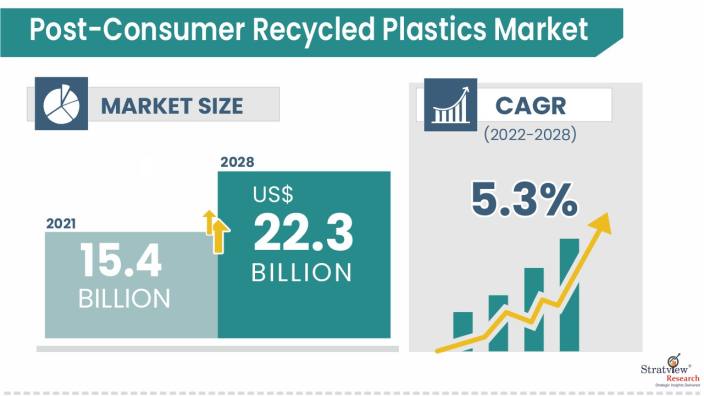
The post-consumer recycled plastics market was estimated at USD 15,4 billion in 2021 and is likely to grow at a CAGR of 5.3% during 2022-2028 to reach USD 22.37 billion in 2028.
Want to know more about the market scope? Register Here
Post-consumer recycled plastics are the plastics that are made from the recycling process of already used plastics, such as packaging material and electronics. This is produced to reduce the environmental impact of plastics on the earth.
The growing demand for post-consumer recycled plastics is mainly due to industrialization and awareness regarding reducing the environmental impact of plastics through the process of recycling. The market drivers for post-consumer recycled plastics are the growing consciousness about the environment and global policies and corporate social responsibility. There is a growing demand for such products by industries that are looking for environmentally friendly products to cut their impact on the environment. Stringent technological advancements in recycling processes raise the standard and applicability of recycled plastics. However, market growth has its difficulties because of the unpredictability of raw material availability, costly processing, and uneven quality. Educational and technological alliances need to be formed with other stakeholders to pull together and combat these hindrances to maintain the market’s progression.
|
Segmentations |
List of Sub-Segments |
Segments with High Growth Opportunity |
|
Service Type Analysis |
Collection & Transportation, Recycling, Incineration, and Landfills/Disposal |
The recycling segment held the largest segment of the market in 2021 and is expected to remain dominant during the forecast period. |
|
Polymer Type Analysis |
Polyethylene Terephthalate (PET), High-Density Polyethylene (HDPE), Low-Density Polyethylene (LDPE), Polypropylene (PP), Polyvinyl Chloride (PVC), Polyurethane (PUR), Polystyrene (PS), and Others |
The polyethylene terephthalate (PET) segment is expected to remain dominant as well as the fastest-growing segment during the forecast period. |
|
End-Use Application Type Analysis |
Packaging, Building & Construction, Automotive, Furniture, and Others |
The packaging application leads the market and is also estimated to be the fastest-growing segment during the forecast period. |
|
Regional Analysis |
North America, Europe, Asia-Pacific, and Rest of the World |
North America is expected to be the fastest-growing market for post-consumer recycled plastics during the forecast period. |
"The recycling segment accounted for the largest market share."
Based on the service type, the market is segmented as collection & transportation, recycling, incineration, and landfills/disposal. The recycling segment held the largest segment of the market in 2021, and is expected to remain dominant during the forecast period, owing to the increasing number of plastic recycling plants all over the globe as mandated by the strict regulations of governments for recycling plastics.
"The polyethylene terephthalate (PET) segment accounted for the largest market share."
Based on the polymer type, the market is segmented as polyethylene terephthalate (PET), high-density polyethylene (HDPE), low-density polyethylene (LDPE), polypropylene (PP), polyvinyl chloride (PVC), polyurethane (PUR), polystyrene (PS), and others. The polyethylene terephthalate (PET) segment is expected to remain dominant as well as the fastest-growing segment during the forecast period, due to its wide range of applications, such as in food packaging, electronics, and pharmaceutical packaging and its specific properties, such as moisture-resistant, non-absorbent, and non-fluorescent.
"The packaging segment accounted for the largest market share."
Based on the end-use application type, the post-consumer recycled plastics market is segmented as packaging, building & construction, automotive, furniture, and others. The packaging application leads the market and is also estimated to be the fastest-growing segment during the forecast period, owing to surge in population and increasing spending power of people, which is giving rise to the construction of new houses in the urban and sub-urban areas globally, and growth in the construction of non-residential buildings and institutes is also a major reason for the dominance of this segment.
"North America accounted for the largest market share."
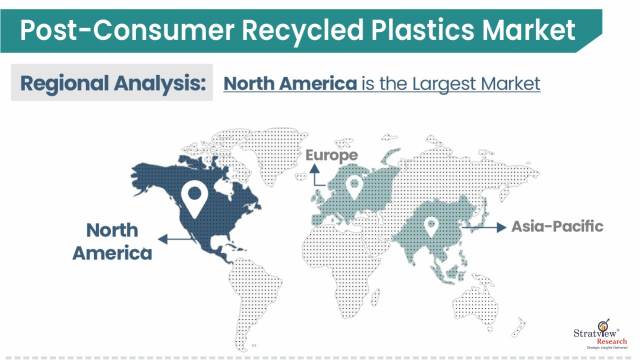
In terms of regions, North America is expected to be the fastest-growing market for post-consumer recycled plastics during the forecast period. The region’s growth is owing to the technological innovations in the waste management industry and government regulations regarding the disposal, collection and recycling of plastic waste. Europe and the Asia-Pacific are also expected to offer substantial growth opportunities during the forecast period.
Know the high-growth countries in this report. Register Here
Some of the major post-consumer recycled plastic manufacturers are:
Note: The above list does not necessarily include all the top players in the market.
Are you the leading player in this market? We would love to include your name. Write to us at [email protected]
This report provides market intelligence in the most comprehensive way. The report structure has been kept such that it offers maximum business value. It provides critical insights into market dynamics and will enable strategic decision-making for existing market players as well as those willing to enter the market. The following are the key features of the report:
This report studies the market, covering a period of 12 years of trends and forecasts. The report provides detailed insights into the market dynamics to enable informed business decision-making and growth strategy formulation based on the opportunities present in the market.
The post-consumer recycled plastics market is segmented into the following categories:
By Service Type
By Polymer Type
By Processing Type
By End-Use Application Type
By Region
This strategic assessment report, from Stratview Research, provides a comprehensive analysis that reflects today’s post-consumer recycled plastics market realities and future market possibilities for the forecast period of 2022 to 2028. The report segments and analyzes the market in the most detailed manner in order to provide a panoramic view of the market. The vital data/information provided in the report can play a crucial role for the market participants as well as investors in the identification of the low-hanging fruits available in the market as well as to formulate the growth strategies to expedite their growth process.
This report offers high-quality insights and is the outcome of a detailed research methodology comprising extensive secondary research, rigorous primary interviews with industry stakeholders, and validation and triangulation with Stratview Research’s internal database and statistical tools. More than 1,000 authenticated secondary sources, such as company annual reports, fact books, press releases, journals, investor presentations, white papers, patents, and articles, have been leveraged to gather the data. We conducted more than 15 detailed primary interviews with the market players across the value chain in all four regions and industry experts to obtain both qualitative and quantitative insights.
With this detailed report, Stratview Research offers one of the following free customization options to our respectable clients:
Company Profiling
Competitive Benchmarking
Custom Research: Stratview Research offers custom research services across sectors. In case of any custom research requirement related to market assessment, competitive benchmarking, sourcing and procurement, target screening, and others, please send your inquiry to [email protected].
Post-consumer recycled plastics are the plastics that are made from the recycling process of already used plastics, such as packaging material and electronics. This is produced to reduce the environmental impact of plastics on the earth.
The post-consumer recycled plastics market was estimated at USD 15,4 billion in 2021.
The forecasted value of the post-consumer recycled plastics market is expected to be USD 22.3 billion in 2028.
The post-consumer recycled plastics market is likely to grow at a CAGR of 5.3% during 2022-2028.
North America is expected to be the fastest-growing market during the forecast period.
The polyethylene terephthalate (PET) segment is expected to remain the dominant polymer type in the market in the coming five years.
Biffa plc, Clean Harbors, Inc., DS Smith plc, Remondis, Republic Services, Inc., Stericycle, Suez SA, Veolia Environment SA, Waste Connections, Inc., and Waste Management Inc. are among the key players in the market.
The growing demand for post-consumer recycled plastics is mainly due to industrialization and awareness regarding reducing the environmental impact of plastics through the process of recycling. The market drivers for post-consumer recycled plastics are the growing consciousness about the environment and global policies, and corporate social responsibility. There is a growing demand for such products by industries that are looking for environmentally friendly products to cut their impact on the environment. Stringent technological advancements in recycling processes raise the standard and applicability of recycled plastics. However, market growth has its difficulties because of the unpredictability of raw material availability, costly processing, and uneven quality. Educational and technological alliances need to be formed with other stakeholders to pull together and combat these hindrances to maintain the market’s progression.


WE ACCEPT