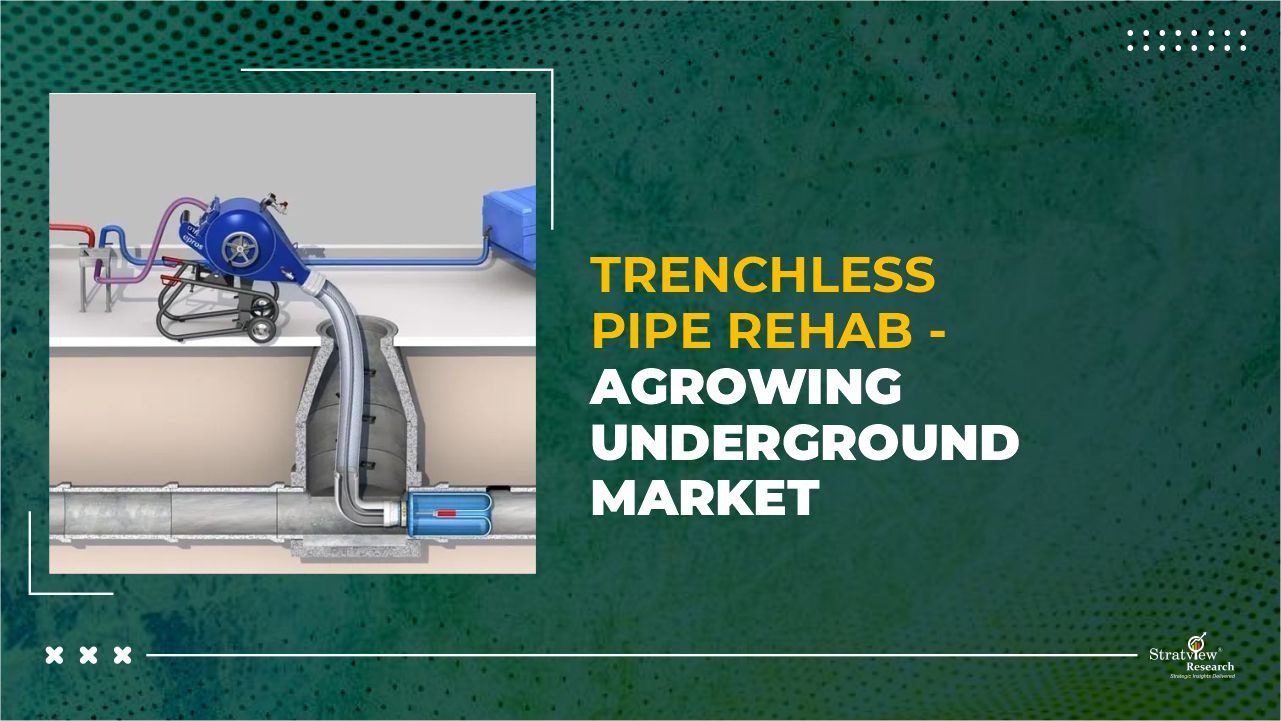
Ageing water and sewer networks across the US and Europe are driving urgent demand for trenchless pipe rehabilitation. With millions of miles of pipelines nearing end-of-life, advanced methods like CIPP, pipe bursting, and SIPP offer cost-effective, minimally disruptive solutions. As urbanization accelerates and infrastructure funding rises, the global trenchless rehabilitation market is set for steady growth through 2030.
Around 1.6 million miles of water and sewer pipes in the US reached an average age of 45 in 2020, and a small portion of that network is approaching a century in service as of 2025. A not-so-better situation also applies to developed European countries as well, and this accelerating deterioration has intensified the need for large-scale rehabilitation and replacement of critical underground infrastructure. Conventional excavation-based methods, however, present significant challenges: the sheer scale of these networks makes traditional digging economically impractical, environmentally unsustainable, and disruptive to urban ecosystems. Consequently, trenchless rehabilitation techniques have emerged as a viable solution for addressing subsurface infrastructure deterioration without extensive excavation.
Capitalizing on Infrastructure Renewal Through Trenchless Technologies:
Globally, around 35% of treated drinking water is lost each year due to leaks and inefficiencies, with more than 240,000 water main breaks occurring annually in the US alone, translating to a loss of around US$ 2.6 billion and trillions of gallons of processed drinking water. Currently, ~4,000 miles of pipes need to be replaced/rehabilitated annually in order to minimise these losses, and as the existing water infrastructure ages further, the replacement volume is expected to be as high as 20,000 miles per year by 2035, according to the EPA. Not just water pipes but even sewage pipes are on the verge of repair as a significant portion of the US sewage collection systems is between 30 and 100 years old, making them more vulnerable to leaks, clogs, and failures caused by degradation. Europe, too, faces similar challenges, with sewer systems in cities like London and Paris tracing their origins to the 19th century.
Much of this ageing network is composed of outdated materials such as steel and iron, which are increasingly prone to cracks, joint failures, and contamination risks, further emphasizing the urgent need for strategic rehabilitation. Trenchless rehabilitation techniques, thus, present a forward-looking, cost-effective alternative—extending the life of these existing pipelines without the extensive disruption or environmental impact associated with traditional replacement methods.
Additionally, the synergy between the need for durable pipeline systems and the pressures of urban expansion is also creating a powerful momentum, fuelling the need for rehabilitation further ahead. According to the United Nations, the global urban population is projected to increase from 56% in 2020 to 68% by 2050, with North America, Latin America, the Caribbean, Europe, and Oceania being the most urbanised regions. Urban development on such a scale would require not only the installation of new pipelines but also the upgrading of existing systems, often in highly congested environments where traditional excavation methods are neither practical nor acceptable.
As emerging economies face escalating infrastructure demands, environmental challenges, and urban congestion, the limitations of open-trench approaches are becoming increasingly evident. While conventional dig-and-replace techniques can be very expensive, typically costing between US$ 50 and US$ 250 per foot, with larger projects averaging around US$ 5,000 to US$ 13,000, the typical expense for trenchless pipe repair is considerably lower, usually falling between US$ 6,000 and US$ 12,000, with prices ranging from US$ 80 to US$ 250 per foot. The global shift in priorities has positioned trenchless technologies not just as an alternative but as a necessity in the evolution of underground infrastructure. Yet, to truly understand the value they offer, it's imperative to understand the cutting-edge technologies that make trenchless pipe rehabilitation both possible and powerful.
Commercial Significance of the Top Trenchless Techniques:
At the core of trenchless pipe rehabilitation lies a highly sophisticated suite of advanced, minimally invasive technologies specifically designed to restore and strengthen existing pipeline systems without the extensive disruption, environmental impact, or financial burden typically associated with traditional open-cut excavation methods.
Foremost among these technologies is the Cured-in-Place Pipe (CIPP) lining, which will be the dominant method during 2024-2030, with a market size of ~US$ 3.8 billion in 2030, as per forecasts by Stratview Research.[i] Widely favoured for its ability to extend the lifespan of pipelines with minimal surface disruption and without the need for full pipe replacement, this method is particularly advantageous in cases when reaching the crack requires going through bends since the liner used is flexible and is cured-in-place. Highly used in wastewater main pipes, CIPP lining installation rates are approximately five times faster than full pipe replacement.
On the other hand, Pipe Bursting, which is expected to be the fastest-growing method during 2024-2030, is the only trenchless pipe rehabilitation method that replaces the entire pipe instead of repairing it. Suitable for non-pressure applications, this method is employed mostly when the required pipe diameter is higher than the original or if the cracks are beyond repair. This technology minimises the chances of developing stoppages as an entire pipe bursts and a new pipe is placed.
Slip Lining, another established method most suitable for networks without a lot of bends since an already cured pipe is inserted, is valued for its cost-efficiency, especially in non-critical applications.
Meanwhile, newer technologies such as Spiral Wound Lining and Spray-In-Place Pipe (SIPP) are efficient, jointless, seamless, and long-lasting solutions for ageing underground pipelines. By providing enhanced adaptability, these are suitable for non-standard pipe geometries, irregular defects, or applications where traditional access points are limited.
The top three trenchless rehabilitation methods—CIPP, Pipe Bursting, and SIPP—are projected to account for approximately 80% of the total sales during 2024-2030, as per estimates by Stratview Research.
Collectively, these trenchless techniques reduce rehabilitation time, limit environmental impact, lower overall lifecycle costs, and significantly minimise disruptions to surrounding infrastructure and communities, making them essential tools for modern pipeline management. These tangible benefits have not only enhanced operational efficiency for utility providers but have also fuelled substantial growth in the global market.
Laying the Groundwork for Growth:
Valued at approximately US$ 6.9 billion in 2023, the global trenchless pipe rehabilitation market is projected to grow at a CAGR of 4.7%, reaching nearly US$ 9.7 billion by 2030. This growth is being led by North America, where the United States stands at the forefront of adoption and innovation. As one of the earliest adopters of trenchless technologies and also home to the longest underground pipeline network, the US has significantly influenced global industry standards, driven by the need to modernise ageing infrastructure while minimizing surface-level disruption.
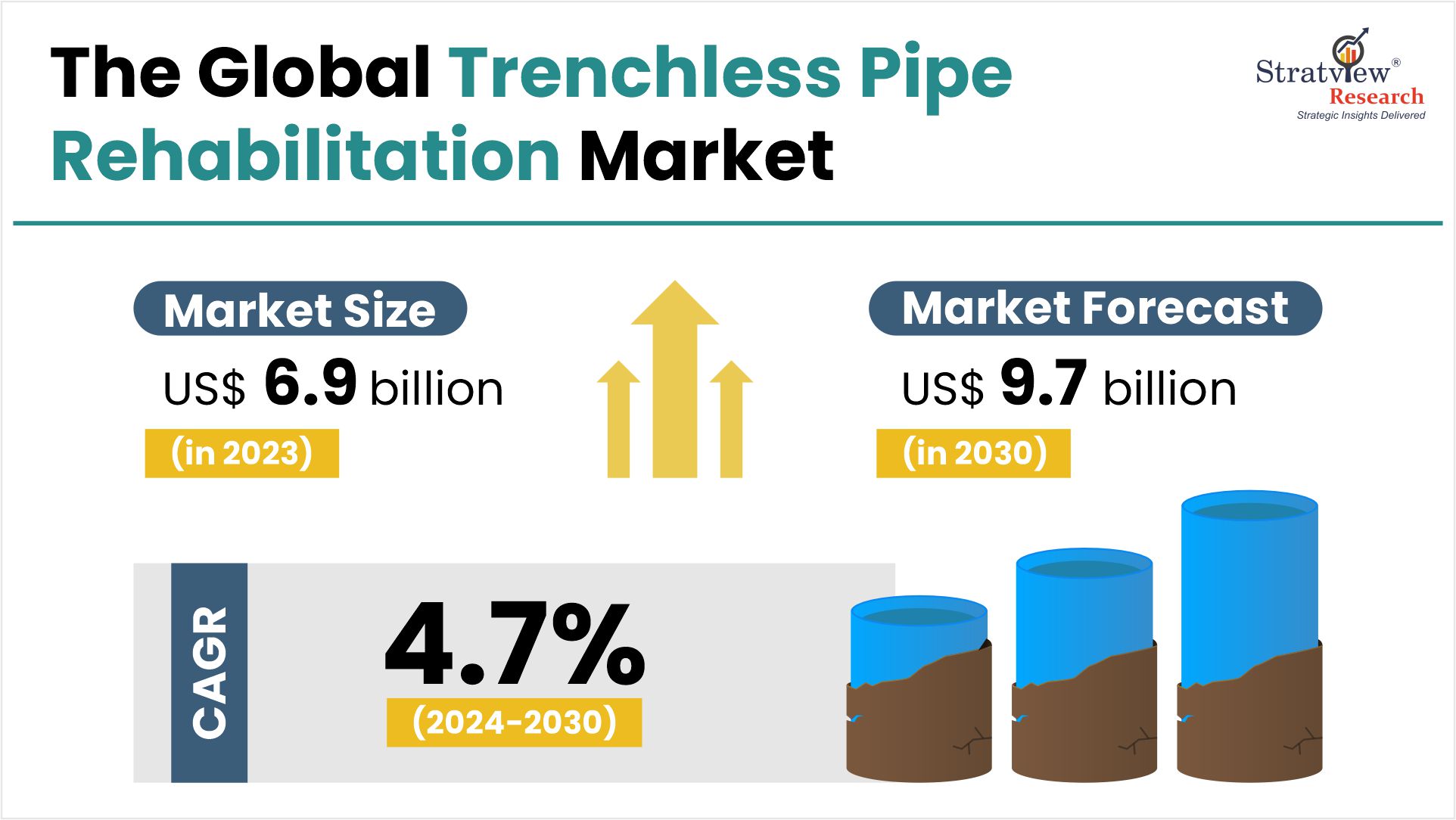
Fig 1. The Global Trenchless Pipe Rehabilitation Market Forecast
Europe, the second-largest regional market, is projected to be valued at close to US$ 900 million in 2030, with Germany, France, the UK, and Spain being the top countries. This robust growth is driven by increased government investments in infrastructure renewal, particularly in Germany and the UK. Also, as per Germany's proposed infrastructure fund, the federal government is set to obtain £300 billion to support national infrastructure initiatives, while state governments will be given £100 billion for regional infrastructure projects.[ii] Moreover, following the guidelines from the National Infrastructure Commission, UK water companies have pledged to lower leakage by 50% based on 2017-2018 figures by the year 2050.
The need for the rehabilitation of the water infrastructure in Europe is huge, but the government's cooperation differs substantially from one country to another. In January 2025, the UK's water infrastructure announced a staggering £104 billion approval for 2025-2030, of which £456 million is expected to be spent on replacing over 8,400 km of water mains in the next five years. Similarly, the French government has announced £1.1billion for water infrastructure projects in 2025 alone. Apart from these, investments are also made through collective government bodies like the EU's Recovery and Resilience Facility (RRF) for the EU and its member states. Collectively, more than $450 billion is expected to be spent on water and wastewater infrastructure in Europe between 2024-2030, according to a study.
Smarter Underground: Trenchless Tech and the Path Ahead
In conclusion, trenchless pipe rehabilitation represents a smart, sustainable, and scalable solution for addressing the global infrastructure crisis. Its ability to extend the life of existing pipelines, reduce costs, minimise environmental impact, and adapt to future technological advancements positions it as a cornerstone of modern infrastructure management. As cities urbanize and infrastructure ages, the importance of trenchless methods will only grow, ensuring that urban environments can thrive while preserving their underground lifelines. More focus and capital, however, need to be poured in from governments worldwide, as the annually required capital and the allotted capital to tackle the ageing infrastructure are several billion dollars apart, even for the developed countries.
Also, while widely adopted in many developed nations, this technology is still gaining ground in highly-populated countries like India, which represents another huge growth avenue for this technology.
Subscribe to our newsletter
Related Articles:
.jpg)
Semiconductor Fabs: A Strong Pipeline of Opportunities
Didn’t find what you were looking for?
Tell us about your requirements
(Our team usually responds within a few hours)